
In Korea, taking off your shoes before entering indoors is basic etiquette. It applies not just at homes, but also at some restaurants and temples. Many first-time foreign visitors feel confused and wonder, “Why do I have to take my shoes off?”
This isn’t just about hygiene. It’s a rule shaped by hundreds of years of ondol culture and Korean lifestyle. From what I’ve organized, knowing this culture in advance makes your experience in Korea much smoother.
Let me go through where, why, and how to remove your shoes — one by one below.
What We’ll Cover Today
- Why Koreans take off their shoes
- 3 places where you must remove your shoes
- Good manners to know when removing shoes
- Common mistakes foreigners make and how to fix them
- Quick checklist by location
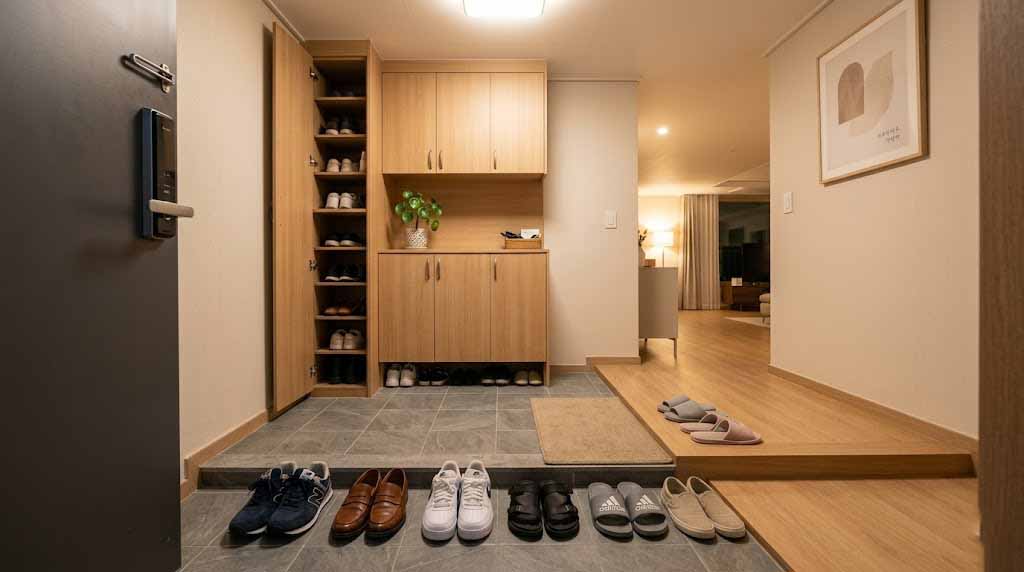
Why Koreans Take Off Their Shoes
Korea’s traditional way of living is based on a floor heating system called Ondol. Ondol heats the floor itself from below. Because of this, Koreans have long sat on the floor, eaten on the floor, and slept on the floor.
Since the floor became the living space, wearing shoes inside naturally became a serious breach of etiquette. Dirt and contaminants from outside would come directly into the living area. This isn’t just about cleanliness — it’s about respecting the space.
Modern Korean apartments have changed in structure, but this culture continues. Every home has a dedicated shoe-removal space called hyeon-gwan (현관) — the entryway — for exactly this reason.
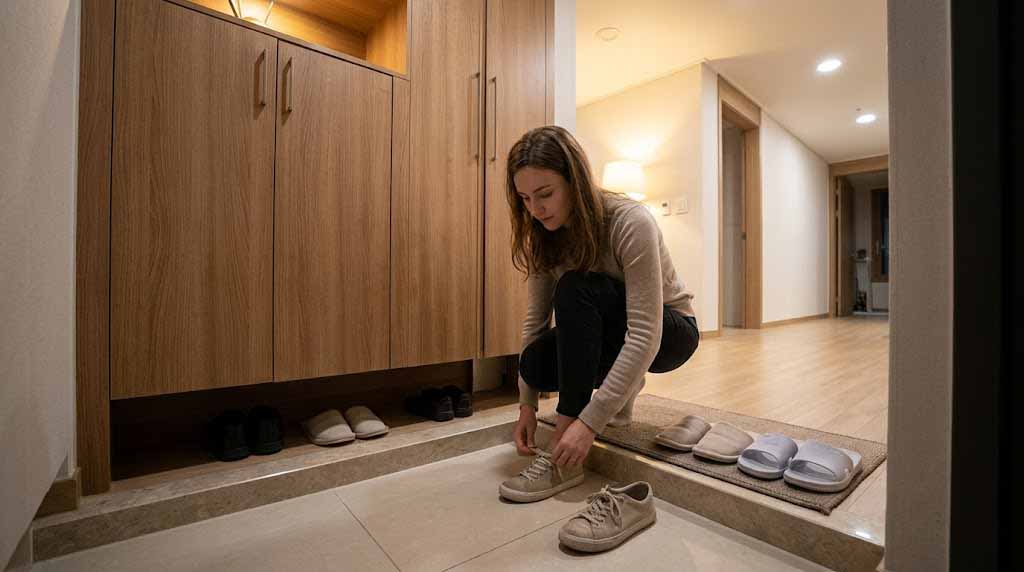
Shoe Etiquette at Korean Homes
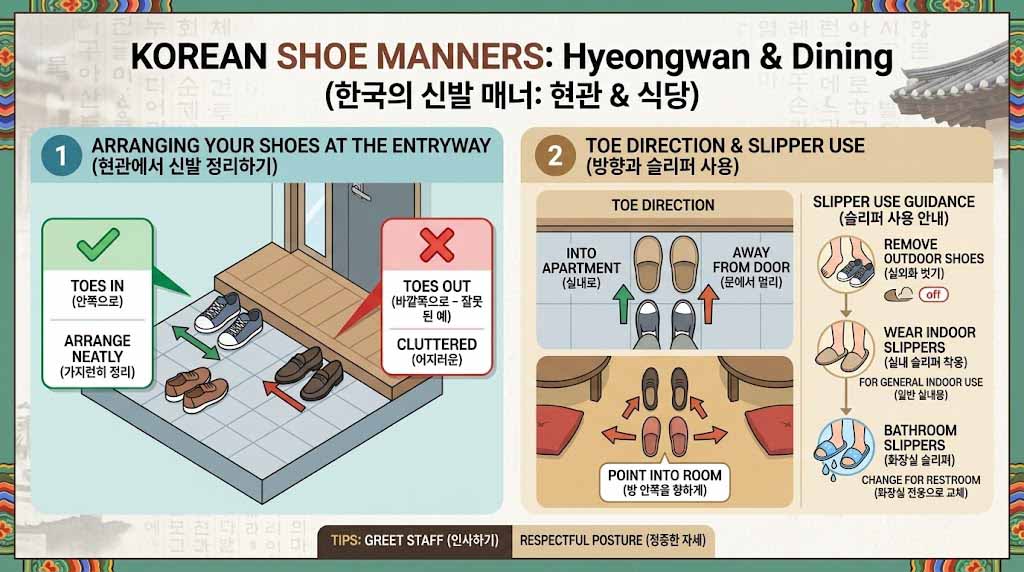
If you’re invited to a Korean home, removing your shoes at the entryway is not optional. Before stepping inside, take off your shoes and place them neatly with the toes facing toward the door.
A lot of people ask — do I have to wear socks? Bare feet are technically fine. But in homes with elders or in more formal settings, wearing socks is seen as more respectful. It’s a good idea to pack a clean pair of socks before visiting a Korean home.
Many hosts will offer you indoor slippers. If they do, just put them on naturally. Refusing can actually feel a bit awkward.
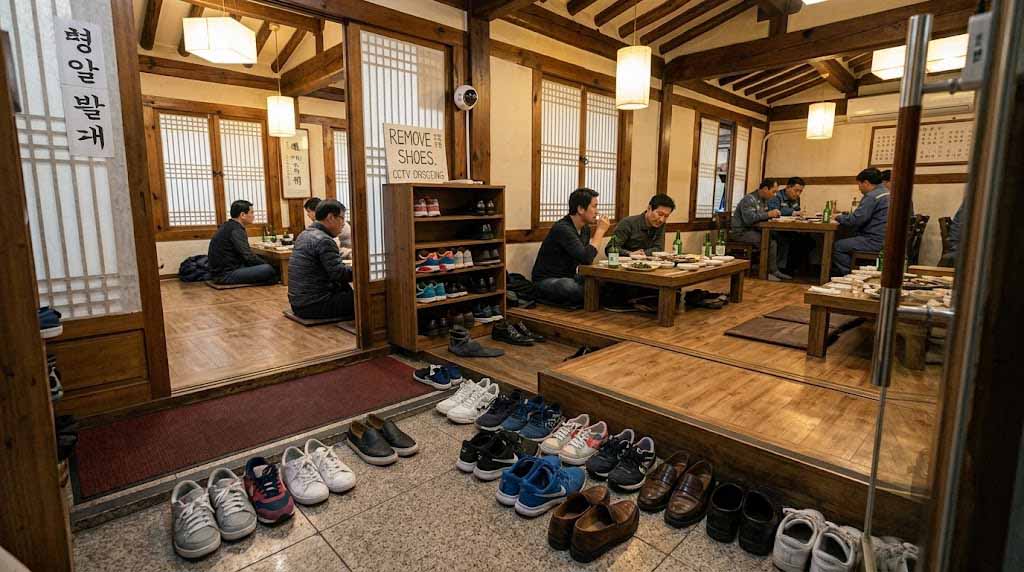
식당에서 신발 벗어야 하는 경우: When to Remove Shoes at Korean Restaurants
Not every Korean restaurant requires you to remove your shoes. But at floor-seating restaurants (좌식 식당), it’s almost always required. These are restaurants where you sit directly on the floor without chairs.
There’s a question I hear often: “How do I know?” If you see a shoe rack or shoe storage at the entrance, that’s your signal to remove your shoes. Or if other guests’ shoes are already on the floor at the entrance, that’s a clear sign too.
Korean BBQ restaurants, traditional set-meal restaurants (한정식), and some soup restaurants often have floor-seating areas. Some restaurants have both floor-seating zones and regular table zones. Asking the staff “Do I need to take off my shoes here?” is completely fine.
I’ve also put together a separate post on Korean restaurant recommendations — if you want to experience a floor-seating restaurant for the first time, check out the [Korean Traditional Restaurant Recommendations post](link to be verified) as well.
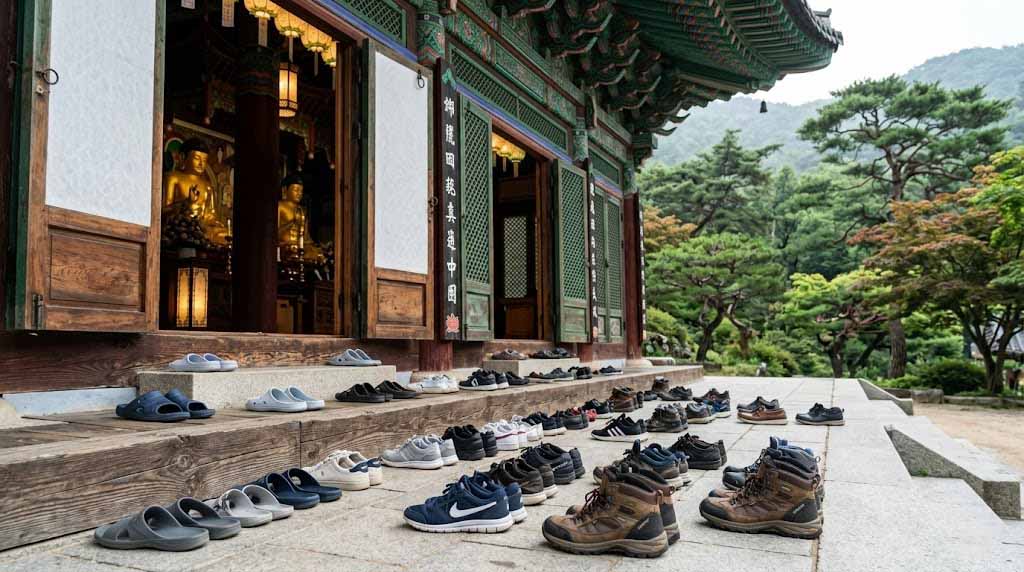
사찰에서 신발 벗는 방법: How to Remove Shoes at Korean Temples
At Korean temples, especially when entering the main prayer hall (법당, beop-dang), removing your shoes is absolutely required. The prayer hall is a sacred space where the Buddha statue is enshrined. Entering with shoes on is considered a serious sign of disrespect.
When removing your shoes, take them off at the bottom of the steps and place them neatly with the toes facing outward. At temples, it’s said that you can tell a visitor’s level of respect just by how they arrange their shoes — shoe tidiness is taken seriously.
When walking around the temple grounds, it’s best to be quiet near the monks’ living quarters (요사채, yosachae) as well. Inside the prayer hall, asking permission before taking photos is also basic etiquette.
Some of Korea’s most well-known temples include Jogyesa in Seoul, Bulguksa in Gyeongju, and Haeinsa in Hapcheon. Before visiting, check each temple’s official website for visiting hours and etiquette guidelines.
신발 벗을 때 알아두면 좋은 매너: Good Manners to Know When Removing Shoes
Sometimes how you remove your shoes matters more than just removing them. Knowing the following in advance will help you act much more naturally in Korea.
✅ Shoe arrangement: After removing your shoes, tidy them up. Leaving them in a mess looks careless and can get in others’ way.
✅ Check your socks: Avoid socks with holes or that are very worn. Packing clean socks before your Korea visit is a practical tip.
✅ Wear offered slippers: If a host or restaurant offers slippers, put them on naturally. Refusing can actually create an awkward moment.
✅ Toe direction: At homes and restaurants, place shoes with toes facing toward the door. At temples, place them with toes facing outward (toward the bottom of the steps).

외국인이 자주 하는 실수 3가지: 3 Common Mistakes Foreigners Make
Mistake 1: Walking in without knowing shoes should be removed
Some visitors walk straight into floor-seating restaurants or temples without removing their shoes. If there’s a shoe rack at the entrance or you see other guests’ shoes, that’s the signal to remove yours. When in doubt, just ask the staff — it’s the quickest solution.
Mistake 2: Removing shoes but leaving them in a mess
Removing the shoes is great, but some people just toss them anywhere. In Korea, how you arrange your shoes reflects your manners. Just 30 seconds of tidying is all it takes.
Mistake 3: Entering with holey socks or bare feet in formal settings
Bare feet or holey socks aren’t technically wrong. But in homes with elders or more formal settings, it can look a little awkward. Packing a clean pair of socks in your bag before visiting Korea is a smart move.
장소별 신발 벗기 빠른 정리: Quick Summary by Location
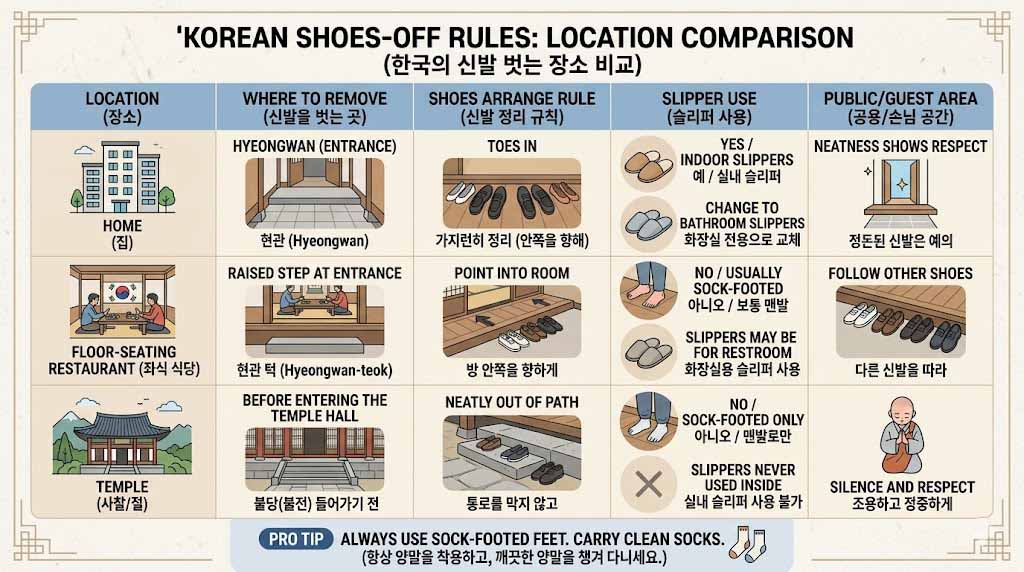
| Location | Remove Shoes | Toe Direction | Slippers | Caution |
|---|---|---|---|---|
| Home | Required | Toward door | May be offered | Check sock condition |
| Floor-seating restaurant | Floor area only | Toward door | Rarely offered | Check for shoe rack |
| Temple hall | Required | Outward | None | Must tidy neatly |
| Jjimjilbang | Required | Use locker | 제공됨 / Provided | Remember locker number |
| Regular restaurant | Not required | — | — | Check for floor seating |
Korea Shoes-Off Culture Summary Checklist
Just remember these before visiting Korea.
- ✅ Remove shoes at the entryway of every Korean home
- ✅ Remove shoes at floor-seating restaurants when you see a shoe rack
- ✅ Always remove shoes when entering a temple prayer hall
- ✅ Always tidy your shoes neatly
- ✅ Check your sock condition in advance
- ✅ When unsure, ask the staff or host
- ✅ If offered slippers, put them on naturally
If you want to dive deeper into Korean culture, check out the [Complete Guide to Korean Traditional Etiquette](link to be verified) post as well. Beyond shoe etiquette, it covers dining manners, how to show respect to elders, and more things every foreigner should know.
In the next post, I’ll be putting together a Complete Guide to Visiting Korean Temples — covering temple food, temple stay programs, and dress code all in one place.