
Why a meal feels incomplete without stew
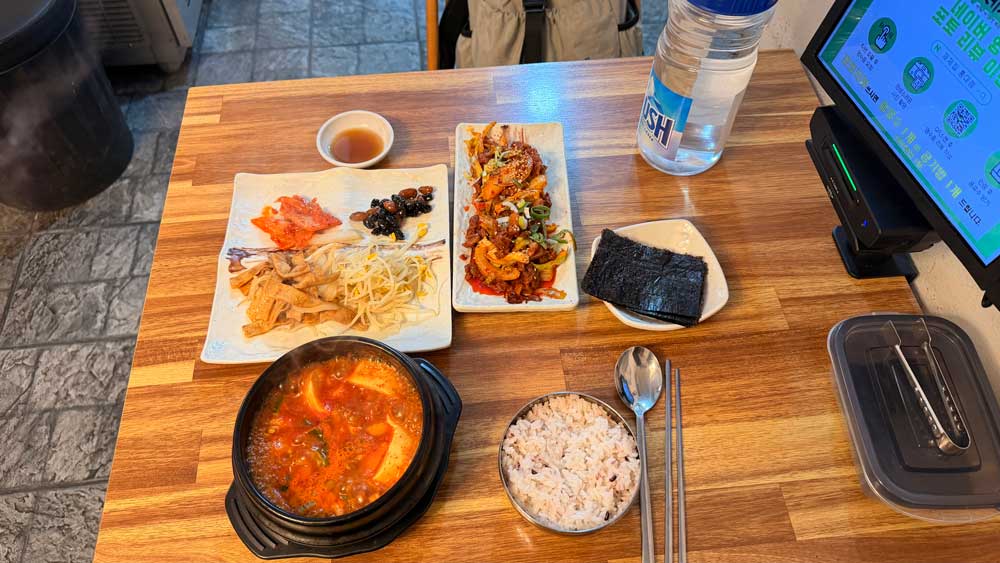
A typical Korean table often centers on “rice + side dishes + something soupy,” and that soup element is frequently a stew or soup. Older generations sometimes said it didn’t feel like they really ate if there was no soup or stew, and many people still feel that way today. With that context, you’ll understand why a stew add-on is genuinely appealing. If you’re new to baekban-style meals, it helps you feel what a full Korean meal structure is like.
What to order when you dine alone

When you dine alone, it can feel limiting because you can’t try multiple main dishes at once. A practical way is to widen one dish into a full set: rice + sides + stew. As you mentioned, spicy pork stir-fry is a solid, filling choice with a low chance of disappointment. It pairs well with side dishes and makes rice disappear fast, which helps you feel that everyday-Korean-meal vibe quickly.
Kiosk ordering flow and easy mistake-proof tips
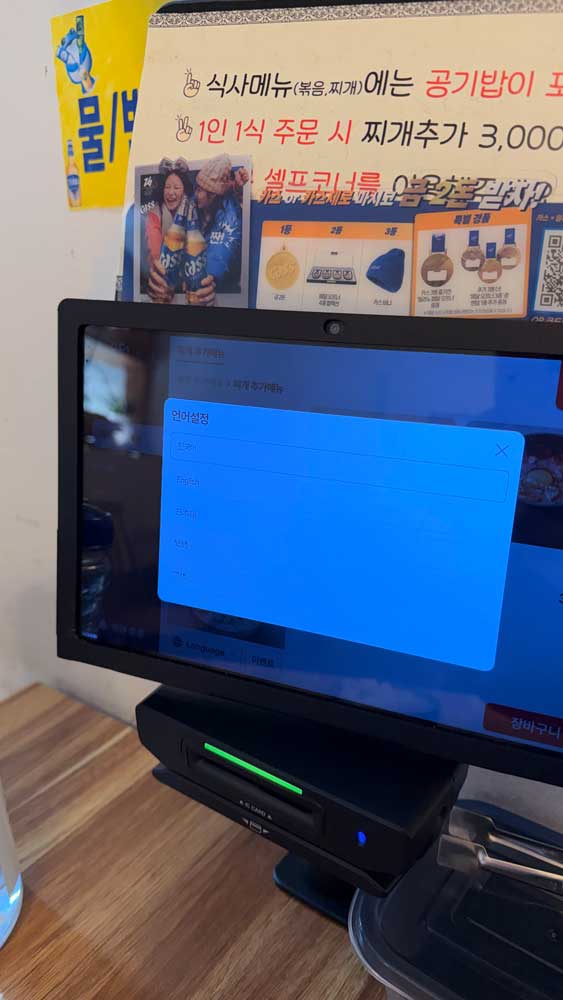
This place uses kiosk ordering, so you can finish ordering without a long conversation. For people not confident in Korean, that can actually be a plus. The usual flow is: choose a menu → select options → pay → check your receipt or order number. To avoid mistakes, just double-check right before paying whether your stew add-on option is selected.
Choosing between soft tofu stew and doenjang stew
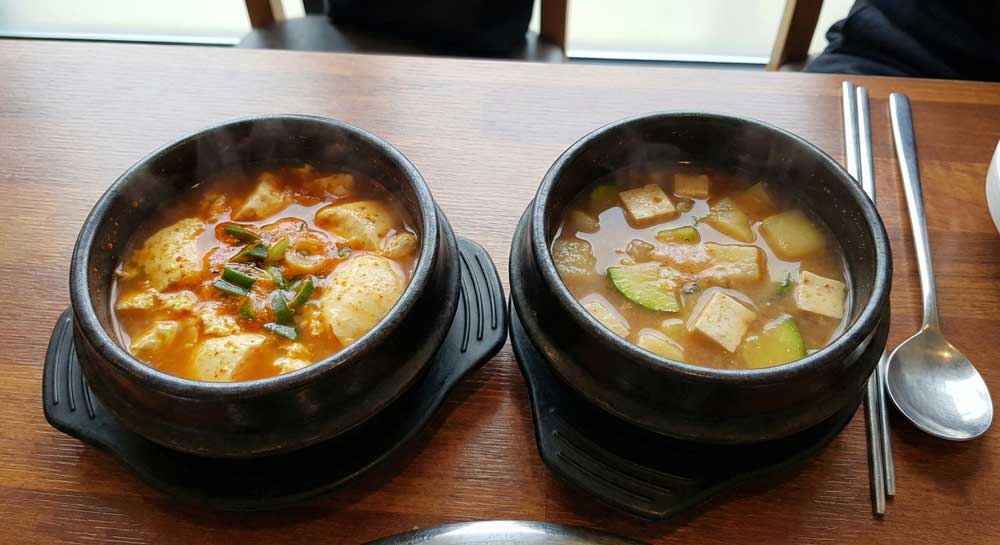
As you pointed out, a key charm here is that you can add a stew at a low extra cost. Soft tofu stew often leans gentle-but-spicy, and it pairs nicely with a seasoned main like spicy pork because it “resets” your palate. Doenjang stew is more earthy and savory, which feels especially home-style. In my view, doenjang is an easy first pick for a first visit, while soft tofu is great when you’re craving a spicier broth.
Unlimited side dishes and how to eat gim
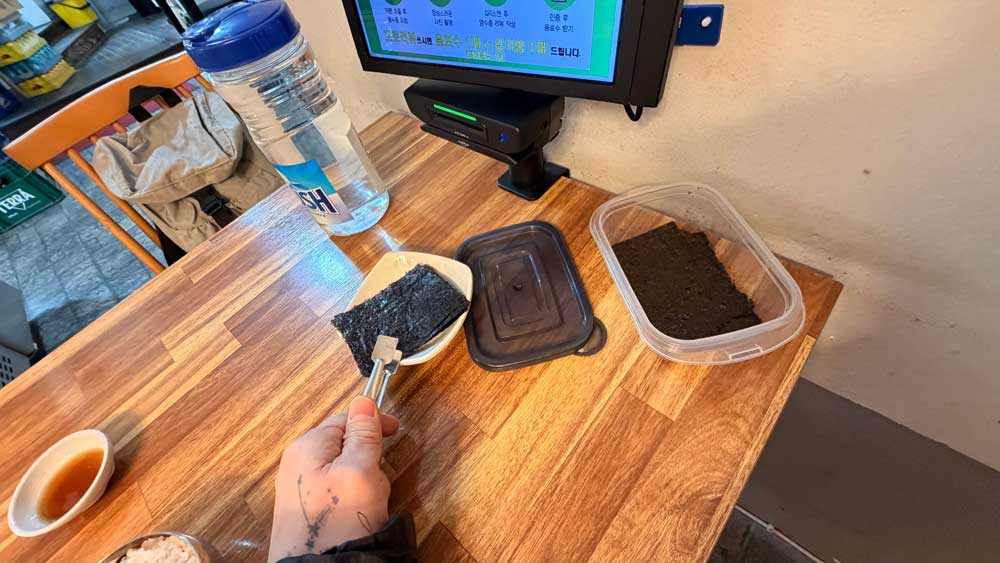
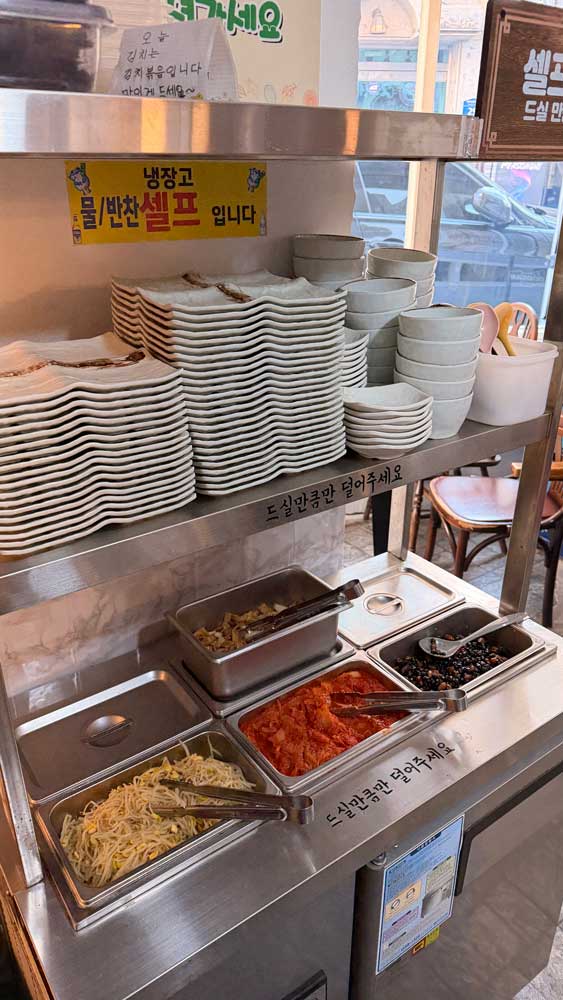
Unlimited side dishes reflect the Korean idea that a meal comes as a “set table.” One practical tip: take small amounts first and go back if you like something, so you can adjust to your taste. And as you mentioned, a must-try here is gim (seaweed). Take a sheet or two, lightly dip it in soy sauce, then eat it with a spoonful of rice—surprisingly big flavor for something so simple.
4-step way to enjoy gim
1) Take just 1–2 sheets first, not a big pile
2) Dip only lightly into soy sauce
3) Scoop a bite-sized spoon of rice
4) Wrap the rice or eat it together right away
Why it’s comfortable solo, plus one small downside
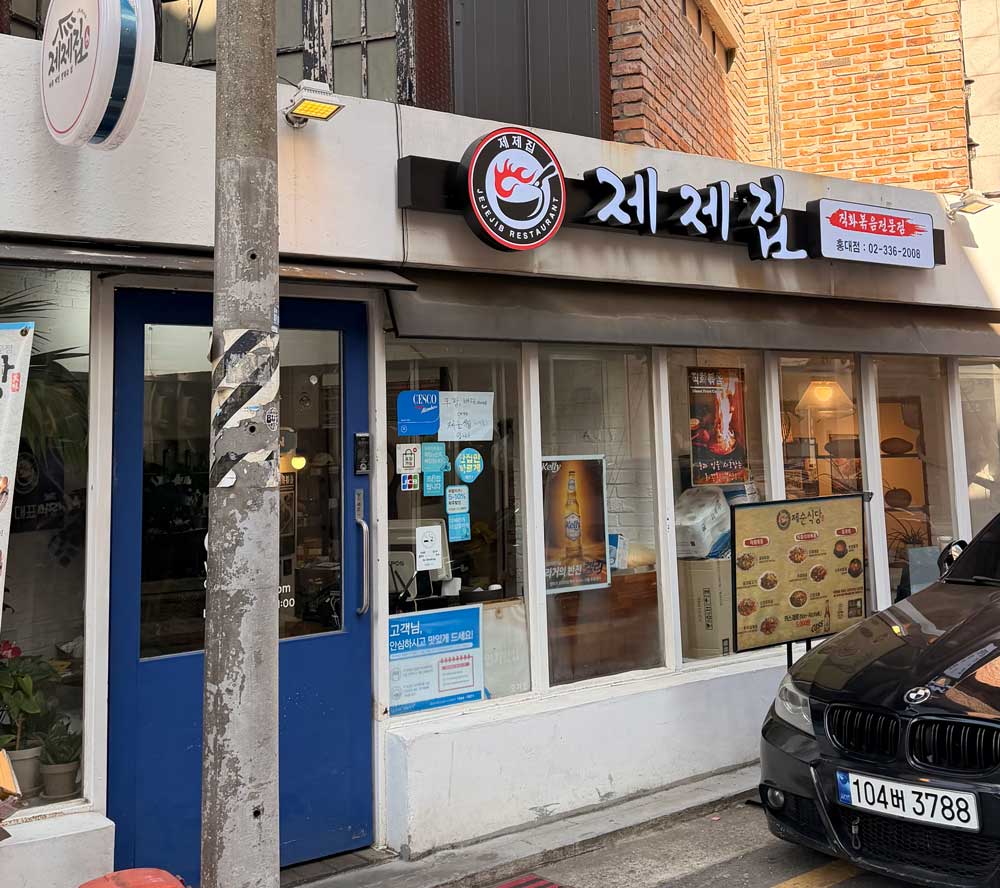
As you said, this place is generally very comfortable for solo diners. Kiosk ordering reduces small talk, and the meal flow stays simple, which lowers the awkwardness. The one downside is that ordering multiple mains alone can feel like too much, so your variety is limited. That’s why I recommend boosting satisfaction with “one main + stew add-on + side dishes.”
A quick pre-visit wrap-up
To wrap it up, Jesun Restaurant is a good fit when your goal is “affordable Korean home-style food.” The key is controlling side dishes as you like and completing the meal with a stew add-on. Since many customers are Korean, travelers may find it easier to feel that “local meal” atmosphere. If you want more similar spots around Hongdae, checking my Korean Restaurants category posts can help you plan your route. And one personal note: when dining solo here, the spicy pork plus a stew add-on is the first combo I’d suggest.
FAQ
Q1. Is it awkward to go alone
A1. Kiosk ordering reduces interaction, and solo diners are common enough to feel normal
Q2. Which stew add-on should I pick
A2. Soft tofu if you want a spicy broth, doenjang if you want a classic savory home vibe.
Q3. Can I really refill side dishes
A3. If it’s a self-serve refill setup, it’s usually fine, but checking the store’s signage is safest
Q4. How should I eat gim
A4. Take a little, lightly dip in soy sauce, and eat it with rice for the simplest great bite
Q5. Is the menu limited when eating alone
A5. Multiple mains can feel too much solo, so building a set with one main plus a stew add-on is easier.
On your next visit, start by checking spicy pork and the stew add-on option on the kiosk, then begin with a simple routine: take just two sheets of gim and lightly dip them in soy sauce.

