
The Seoul remote work environment has the best infrastructure that digital nomads around the world dream of, and accessibility has improved even more thanks to the digital nomad visa introduced in 2024.
In this article, I will summarize Seoul’s high-speed internet environment, recommended workspaces, and practical living tips.
Understanding the rapidly changing workation trends in Seoul can help you maximize your work efficiency.
Check out the vivid information I’ve felt while working in the field for 10 years.
This will be a useful guide for everyone from novice remote workers to veteran nomads.
Table of Contents
- High-speed Internet and Connectivity in Seoul
- Regional Workspaces to Increase Work Efficiency
- Key Points of Digital Nomad Visa (F-1-D)
- Essential Apps for Living in Seoul for Remote Workers
- Checklist for a Successful Seoul Workation
Utilizing Seoul’s Overwhelming Internet Speed and Free Wi-Fi
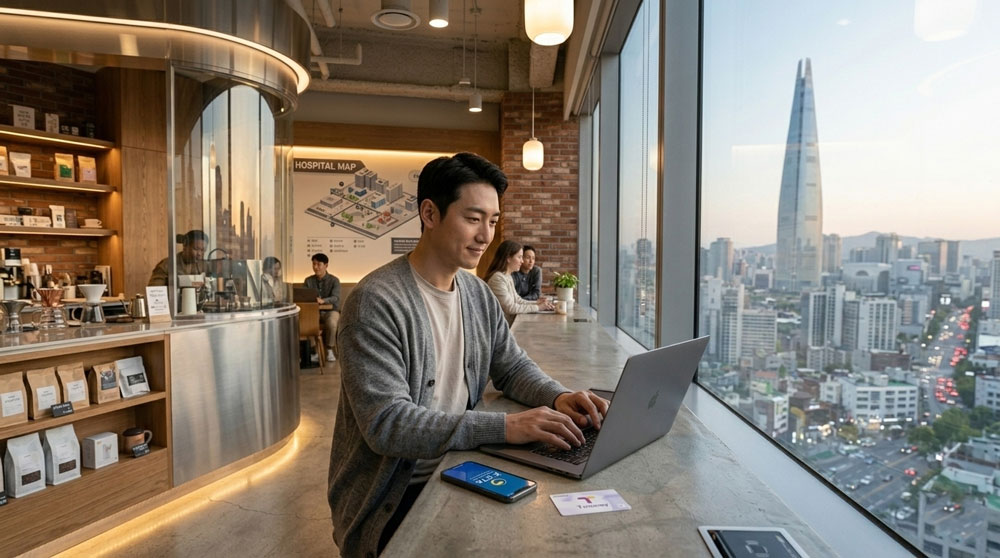
The biggest advantage of Seoul remote work is undoubtedly the world-class internet speed.
It is common to be able to use seamless Wi-Fi for free not only in public places but also in very small neighborhood cafes.
In my experience, I have rarely been stressed about speed when transferring large files or conducting video conferences.
However, if you are doing work where security is important, I recommend using a personal hotspot or VPN rather than public Wi-Fi.
Hongdae and Gangnam: Two Charms of Seoul Remote Work
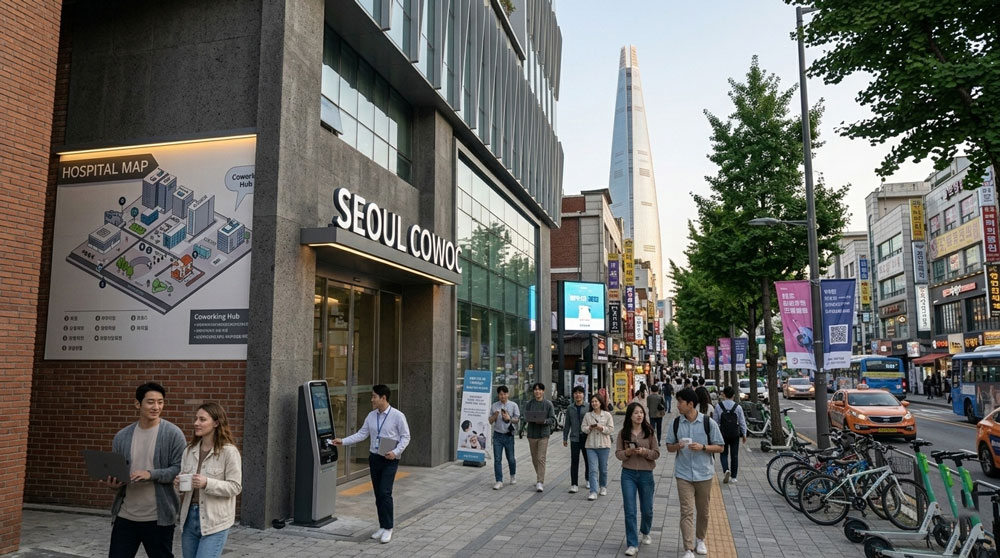
As Andy in Hongdae, I can tell you that Hongdae is the best place for those who do creative work.
This is because there are many unique cafes that provide artistic inspiration, and you can enjoy various cultural events in the evening.
On the other hand, the Gangnam area is more business-oriented and has well-developed large coworking space chains, which is advantageous for professional networking.
It’s good to choose an area based on whether your work style prefers a free atmosphere or an organized office environment.
Generally, Hongdae is popular with designers and writers, while Gangnam is popular with IT developers and startup employees.
Staying Legally with the Digital Nomad Visa (F-1-D)
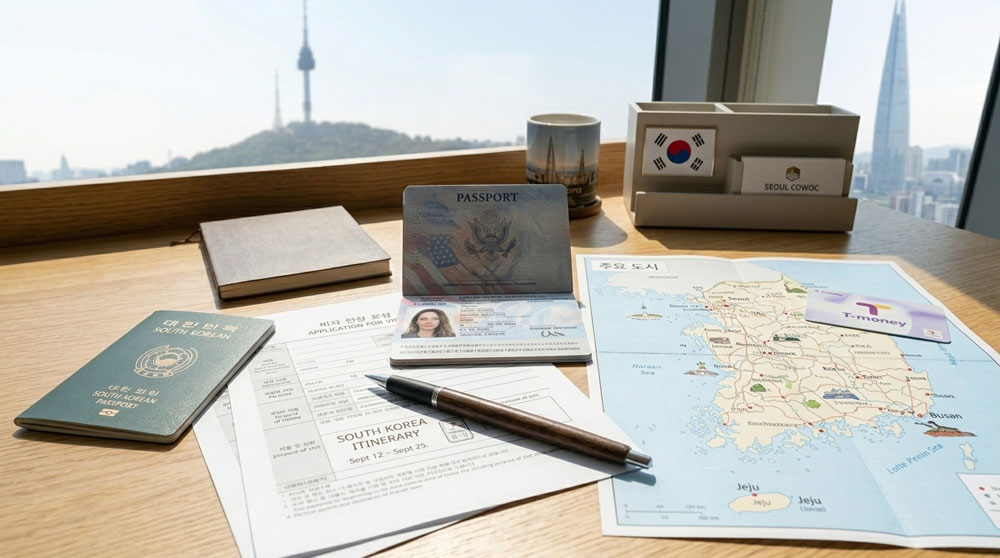
Foreigners planning to work remotely in Seoul should pay attention to the digital nomad visa introduced in 2024.
This visa is designed to allow people employed by overseas companies to work remotely in Korea and stay for a long period (up to 2 years).
To apply, proof of annual income above a certain level is required, and there are several documentary procedures such as criminal record certificates.
Looking at the cases of acquaintances, if the documents were prepared thoroughly, they could receive a visa and live stably without much difficulty.
It has many more advantages in terms of medical insurance and residence reporting than entering on a tourist visa and staying for a short time.
Seoul Living Tips to Boost Work Productivity
Learning apps and habits that make life in Seoul easier will allow you to focus more on your work.
| Category | Recommended Service | Features |
| Transport | Kakao T | Taxi hailing and public transport routing |
| Food | Baedal Minjok | 24-hour delivery, diverse menu |
| Map | Naver Map | Accurate walking directions and shop info |
| Translation | Papago | Image translation and natural Korean |
Using a T-money card is essential when moving around, and recently, payment using the smartphone’s NFC function is also very convenient.
The ‘Mart Attack’ trend, where you visit a mart to buy ingredients like locals, can also be a small pleasure during remote work.
Also, if communicating in Korean is difficult, I recommend joining a language exchange meeting for ‘Yeomanchu’ (seeking natural encounters) to make friends.
Essential Checklist for Successful Seoul Remote Work
- [ ] Check for 24-hour cafes or coworking spaces near your residence
- [ ] Purchase a Korean SIM or eSIM (Unlimited data recommended)
- [ ] Review eligibility for digital nomad visa and prepare documents
- [ ] Set up simple payment apps (Kakao Pay, etc.) for banking or payments
- [ ] Understand Korean public holidays and banking hours
Just taking care of this list will help you spend your first week in Seoul very smoothly.
I also think there would have been much less trial and error if I had this information when I first started working 10 years ago.
If you have more questions about remote work in Seoul, please refer to other posts on the Andy Tattoo blog.
FAQ: Frequently Asked Questions about Seoul Remote Work
Q1. Which cafe brand is best for working on a laptop in Seoul?
Generally, Hollys or A Twosome Place are good to work in because they have a good arrangement of outlets.
Q2. Is it possible to work remotely in Seoul using only English?
English is well-understood in major tourist spots or coworking spaces, but a translation app (Papago) is essential.
Q3. How much is the monthly fee for a coworking space usually?
It varies by location, but it’s usually between 250,000 and 400,000 won per month for a hot desk.
Q4. Is the internet speed in Seoul really that fast?
Yes, it’s very pleasant as speeds of over 100Mbps often come out even on public Wi-Fi.
Q5. What is a good way to make friends while working remotely in Seoul?
I recommend participating in digital nomad or language exchange meetings through the ‘Meetup’ app.