
In 2026, Korea is more vibrant than ever with Korean language learners from all over the world. Beyond K-pop and K-dramas, many people now dream of careers and settling in Korea. In particular, thanks to the digital nomad visa that has become fully established since 2026, the patterns of learners balancing work and study have become more diverse. As ‘Andy,’ who meets numerous foreign artists and students in Hongdae every day, I have summarized the best Korean language educational institutions for 2026 that perfectly suit your goals and personality.
- University Language Schools: The Standard for Academic and Systematic Learning
- Private Korean Academies: Flexible Schedules and Practical Conversation Focus
- Detailed Comparison of University School Features and Costs in 2026
- Visa and Essentials Checklist for Successful Korean Language Training
University Language Schools: For Deep and Comprehensive Learning
University-affiliated language schools are the most traditional and reliable option. Generally, they operate on a per-semester (10-week) basis, where you learn grammar, reading, writing, and listening in a balanced manner. As of 2026, Yonsei University and Seoul National University remain well-regarded for their academic atmosphere. In my opinion, if your goal is to enter a Korean university or get a job here, there is no better choice than these.
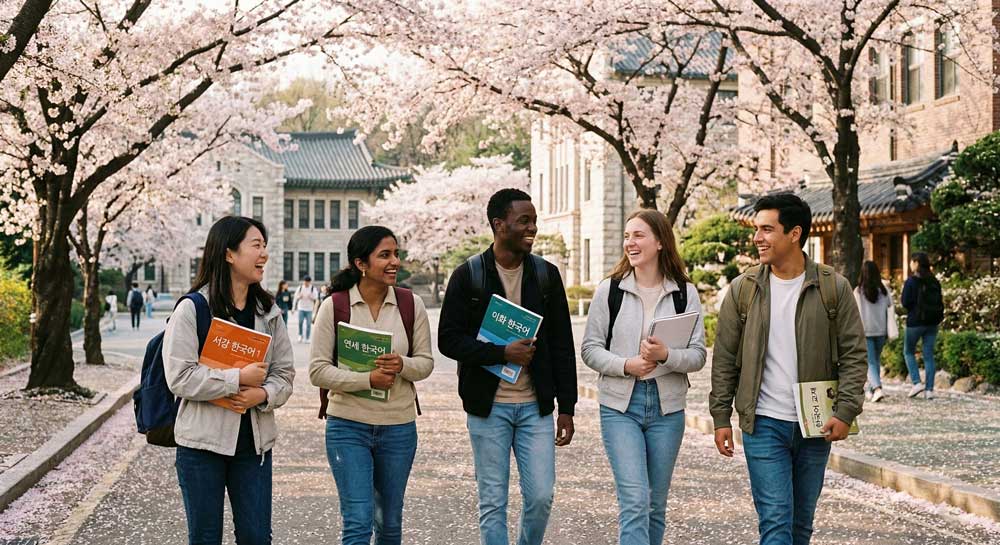
If you are thirsty for “speaking,” I highly recommend the Sogang University Korean Language Education Center. Sogang has long been famous for its conversation-oriented education, and in actual fields, I often see Sogang alumni chatting most fluently with Koreans. Additionally, Kyung Hee University has very well-equipped Korean culture experience programs, making it popular for those who want to learn the language and culture simultaneously.
Private Korean Academies: Harmony of Flexibility and Practical Conversation
For those who find the 10-week schedule of university schools burdensome, private academies are the answer. In 2026, places like ‘Lexis Korea’ or ‘Ganada Korean Language Institute’ have introduced weekly Monday start systems, gaining huge popularity among short-term travelers and digital nomads. Regarding one of the “frequently asked questions in the field,” “Can I learn while working?”, private academies answer by providing various evening and weekend classes.
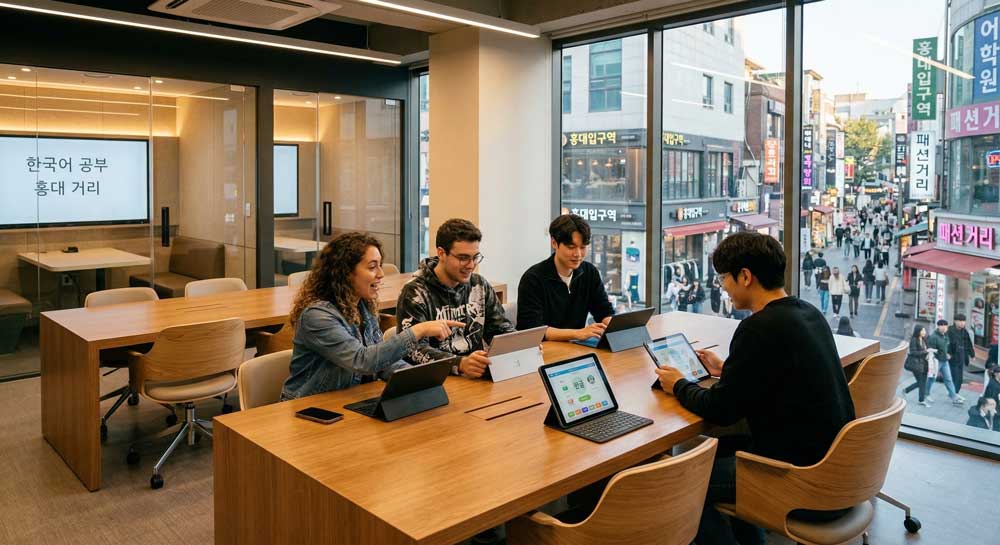
The biggest advantage of private academies is ‘practicality.’ While university schools focus on writing essays or articles, private academies prioritize teaching sentences needed for ordering at Korean restaurants or making friends immediately. From Andy’s perspective, small academies around Hongdae have excellent ‘field trip’ programs where you go to actual cafes or markets with teachers after class to use the language.
Comparison Analysis Table of Major Educational Institutions in 2026
| Category | Institution | Key Features | Tuition/Term |
| Univ. | Sogang | Speaking & Conversation | about 1,800,000 KRW |
| Univ. | Yonsei | Systematic Grammar | about 1,900,000 KRW |
| Univ. | Kyung Hee | Excellent Culture Programs | about 1,750,000 KRW |
| Private | Lexis Korea | Weekly start, Short-term | 300,000 KRW / week |
| Private | Ganada | Night classes, Practical | 250,000 KRW / month |
Preparation Guide for Successful Korean Language Training
If you have decided to enter Korea to study Korean in 2026, you must check the visa issue first. If you plan to study for more than two semesters at a university school, you need a D-4 (language trainee visa), which requires complex documents such as bank balance certificates and proof of final education. On the other hand, private academies or short-term courses can be taken with a visa-free entry (K-ETA) or a digital nomad visa.

Before coming for Korean language training, I recommend learning basic Hangeul reading. Many students Andy meets think, “I’ll just learn it once I’m in Korea,” but being able to read even basics increases the quality of life in Korea by 200%. Just being able to read street signs and knowing subway station names gives you a huge boost in confidence.
Essential Checklist for Korean Language Study Preparation
- Set Learning Goals: Decide whether your goal is to obtain a certificate (TOPIK) or for hobby conversation.
- Check Visa Types: Choose D-4, K-ETA, or F-1-D (Digital Nomad) visa depending on the course duration.
- Choose Residence Area: Decide on accommodation considering not only the distance to school but also nearby commercial areas and amenities.
- Basic Learning: Master Korean consonants and vowels perfectly before entry.
I support your time at the chosen language school to be a precious experience of deeply understanding Korean culture beyond just language study.
Once you’ve decided on a school, prepare for your life in Korea more easily through the post ‘Must-Have Apps for Traveling in Korea: Top 5.’
Frequently Asked Questions (FAQ)
Q1: Which is cheaper, university schools or private academies?
A1: If calculated by the cost per hour, university schools might be slightly cheaper, but in the short term, private academies have less burden of initial costs.
Q2: Is it hard to get into a language school dormitory in 2026?
A2: Yes, they are popular, so you must apply as soon as you receive admission; usually, people find ‘one-room’ studios or ‘share houses’ near the school separately.
Q3: Can I take classes if I don’t speak any Korean at all?
A3: Yes, all institutions operate ‘Level 1 (Beginner)’ courses, so you can learn step-by-step from the basics.
Q4: Is the language school class enough for TOPIK exam prep?
A4: University schools help as their exams are in a format similar to TOPIK, but for high scores, many people take specialized TOPIK lectures at private academies.
Q5: Can I attend a university language school with a digital nomad visa?
A5: Yes, it is possible. However, you must check if the university’s 9 AM to 1 PM class schedule overlaps with your work hours.
Choose the language school that fits your goal right now and start your new challenge in Korea!