
You’re standing somewhere near Hongdae, trying to figure out where to eat.
Maybe you’ve already scrolled through a dozen “best restaurants in Seoul” lists and somehow still feel stuck.
Maybe you’ve got a foreign friend next to you asking, “So… what’s actually good here?”
Here’s the answer. One place. No overthinking needed.
This is what we’re covering today:
- What Dak Hanmari actually is (and why it’s not what you expect)
- Why foreigners are obsessed with this dish
- The menu, the price, and how to order without confusion
- The exact order you should eat it in
- Why the kalguksu noodle finish is the whole point
- Practical tips for first-timers
What Is Dak Hanmari, Exactly?
Dak Hanmari (닭한마리) literally means “one whole chicken” in Korean.
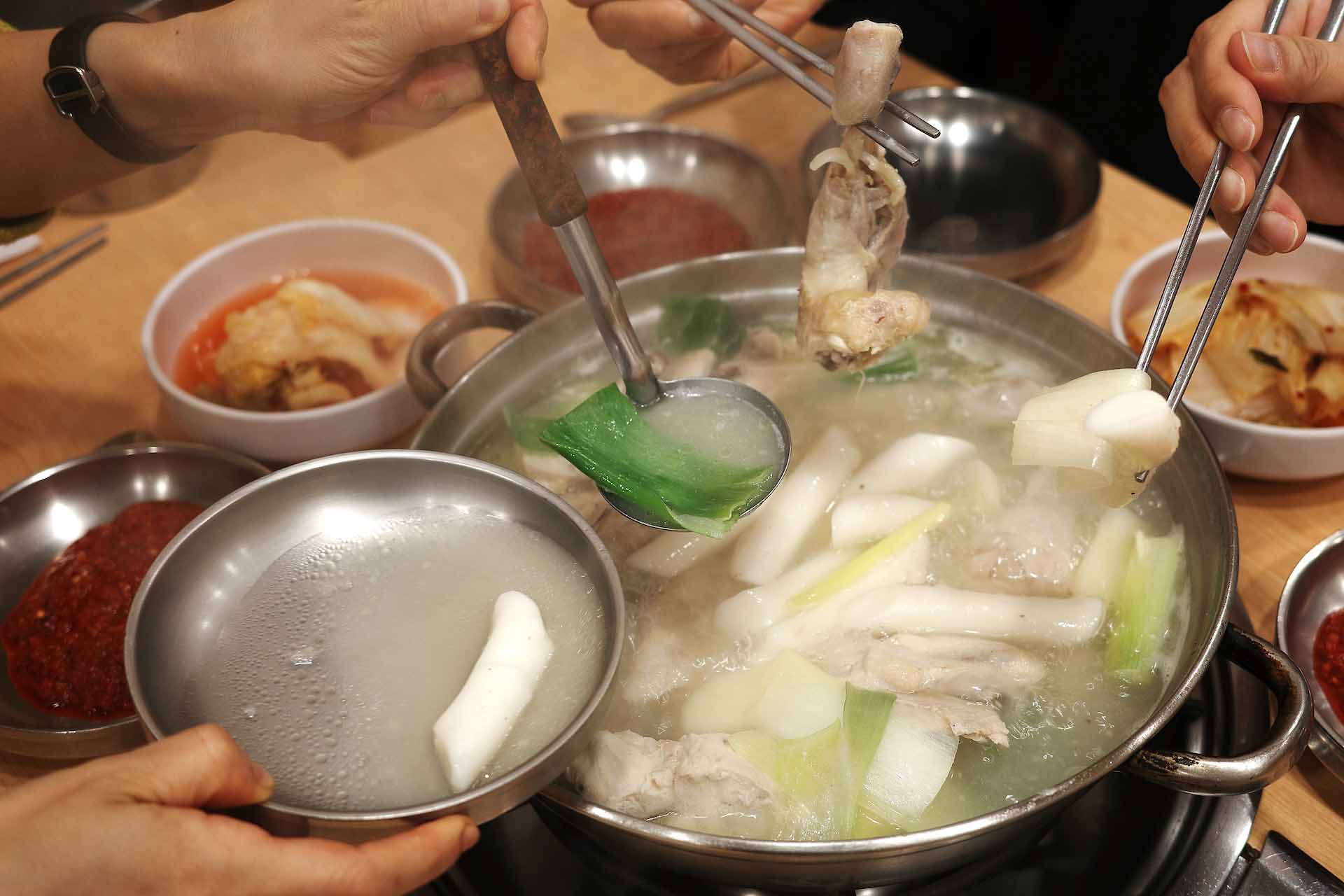
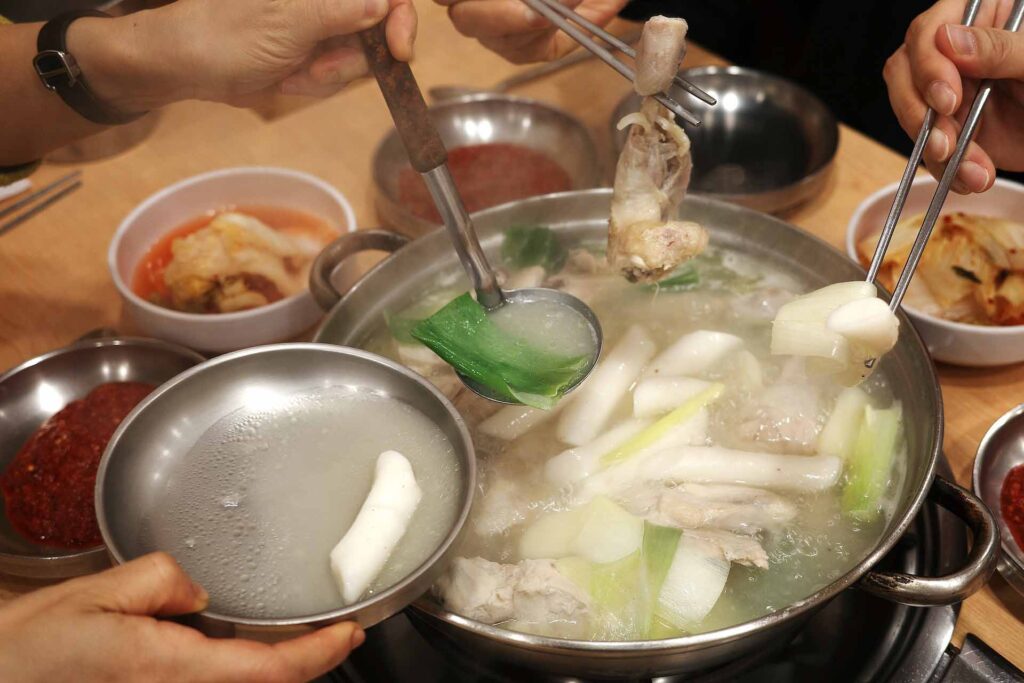
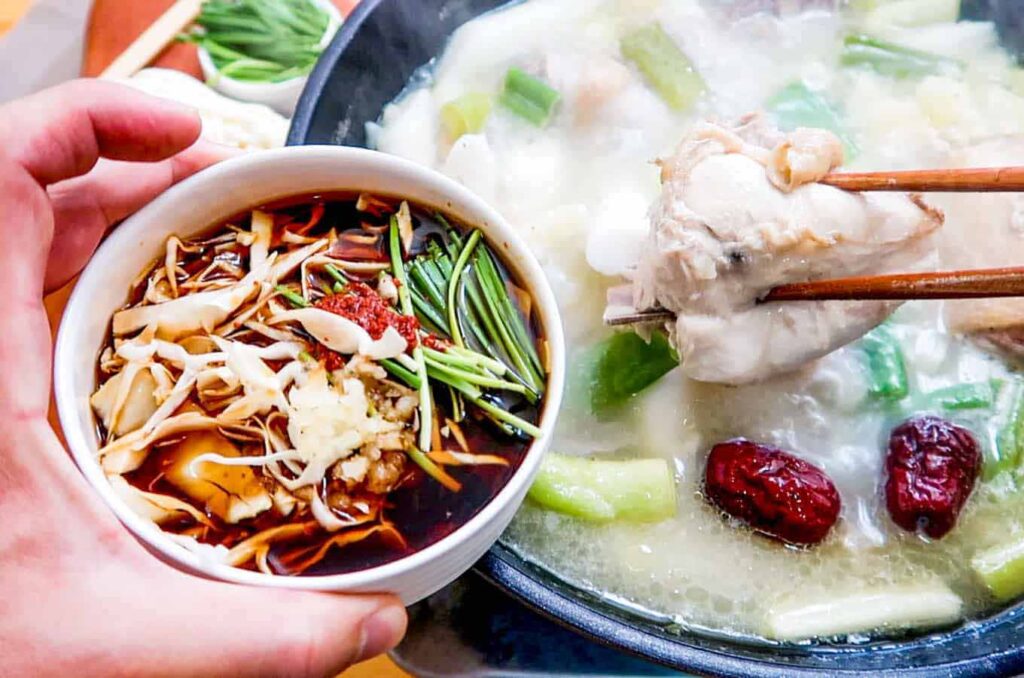
A whole chicken goes into a pot of clear, clean broth — right there on your table, over a live flame. You watch it bubble.
You smell it. And then you eat it together.
It’s not the same as Samgyetang, which is another famous Korean chicken dish.
Samgyetang is a solo bowl, stuffed with glutinous rice, more of a quiet, personal meal. Dak Hanmari is communal.
You sit around the pot, pull pieces off together, dip them in sauce, and talk while the broth gets deeper and richer with every passing minute.
That slow build of flavor? That’s the whole experience.
Why Foreigners Are Lining Up for This
Here’s something interesting — this dish got famous among foreigners before most Koreans even knew it was trending abroad.
Japanese travelers, visitors from Southeast Asia, food bloggers from the US and Europe — they all found their way here through Instagram and word of mouth.
And the reason is actually pretty simple.
It’s not spicy.
That might sound like a small thing, but for anyone who’s ever been nervous about Korean food because of the heat, this is a big deal.
The broth is clear, mild, and deeply savory. The first sip usually gets a reaction somewhere between surprise and immediate comfort.
And then there’s the experience factor.
Cooking your own meal at the table, watching the pot boil, building your own dipping sauce — it’s interactive in a way that feels genuinely fun, not gimmicky.
A recent piece from CNBC noted that food-driven travel in Asia is surging right now, with more visitors specifically seeking out authentic, experience-based meals over tourist-trap restaurants.
Dak Hanmari fits that perfectly.
🎬 Related Video: 외국인이 더 좋아한다는 닭한마리를 처음 먹어 본 반응! (Foreigners Try Dak Hanmari for the First Time)
Watch the exact moment a first-timer takes their first sip of that broth. The face says everything words can’t.
The Menu, the Price, and How to Order
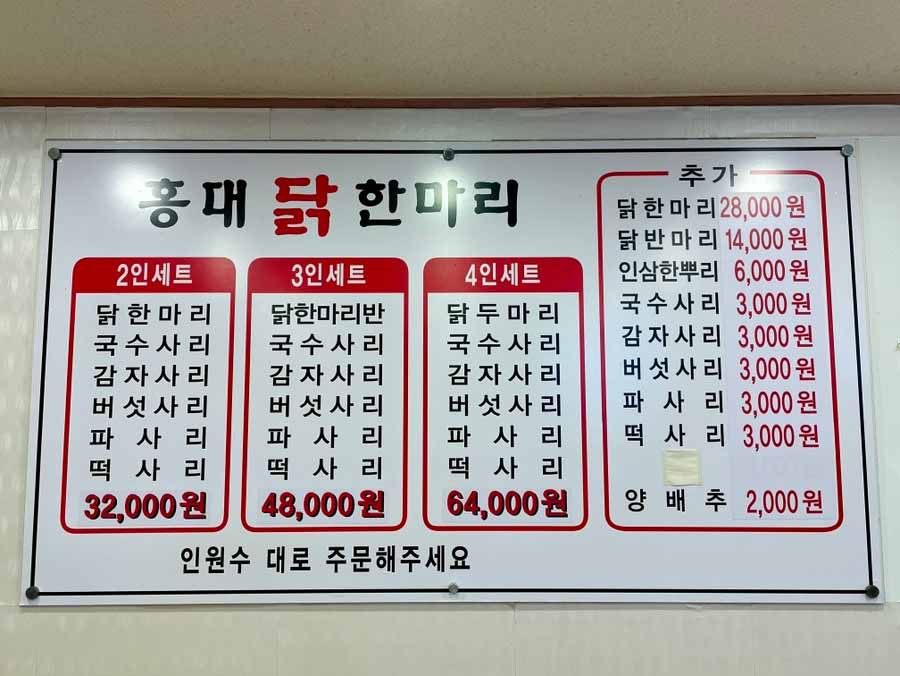
The menu here is refreshingly simple. No overwhelming options, no decision fatigue.
The base order is one whole chicken, priced around ₩32,000–₩35,000, which works out comfortably for two people.
Think of it as roughly ₩16,000 per person — genuinely solid value for what you’re getting.
The chicken comes with basic broth and a few aromatics, but the add-ons are ordered separately.
This is where first-timers sometimes get confused — the pot looks a little bare when it first arrives, and that’s normal.
Here’s what you’ll want to add:
- Tteok (떡) — chewy rice cakes that soak up the broth beautifully
- Gamja (감자) — potatoes that slowly melt into the soup and thicken it
- Beoseot (버섯) — mushrooms for extra depth
- Kalguksu noodles (칼국수) — more on this in a minute, but yes, you need these
Don’t skip the potatoes. As they break down in the broth, they give it this silky, almost creamy texture that’s completely addictive.
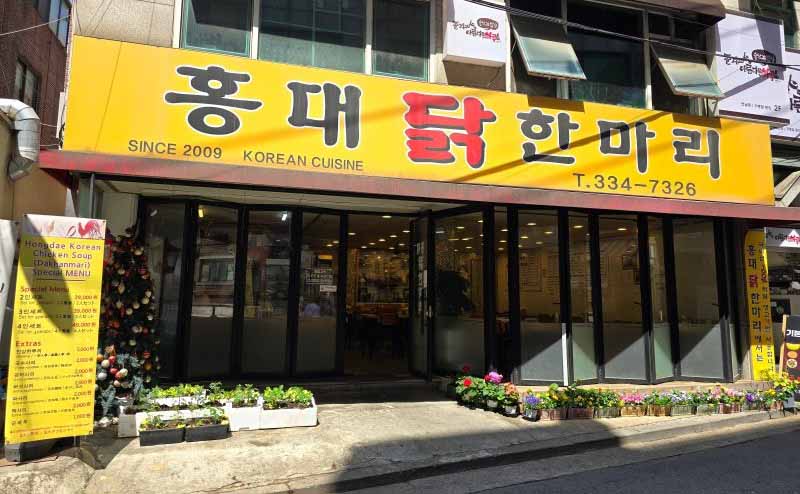
📍 Address: 81, Worldcupbuk-ro 2-gil, Mapo-gu, Seoul (서울 마포구 월드컵북로2길 81, 1F)
🚇 Access: 5-minute walk from Hongik University Station (홍대입구역) Exit 3
🕐 Hours: Daily 11:00 AM – 11:00 PM (Last order 10:10 PM)
The Right Way to Eat It — Step by Step
There’s a rhythm to eating Dak Hanmari properly, and once you get it, everything clicks.
Step 1 — Build your dipping sauce first.
On the table, you’ll find soy sauce, Korean mustard (gyeoja), and minced garlic. Mix them together in your small bowl to taste. A little mustard gives it a sharp, nose-clearing kick. More garlic makes it bold and savory. There’s no wrong ratio — just taste as you go.
Step 2 — Pull the chicken while the broth is still clean.
Once the pot starts boiling, use your chopsticks or the provided scissors to pull pieces of chicken off the bone. Dip them into your sauce. At this stage, the broth is still light and pure, so the chicken flavor comes through clearly.
Step 3 — Work through the add-ons.
As the chicken gets eaten down, the potatoes and rice cakes will be fully cooked. Pull those out, dip them in sauce, and notice how the broth has already started to deepen in flavor.
Step 4 — The finish. Don’t skip this.
The Kalguksu Ending — This Is the Whole Point
By the time you’ve eaten most of the chicken, something has happened to the broth.
The potato starch has dissolved into it. The chicken fat has melted through it. The garlic and green onion have been slowly releasing their flavor the whole time.
What started as a clean, delicate soup is now thick, golden, and deeply savory in a way that’s hard to describe until you’ve tasted it.
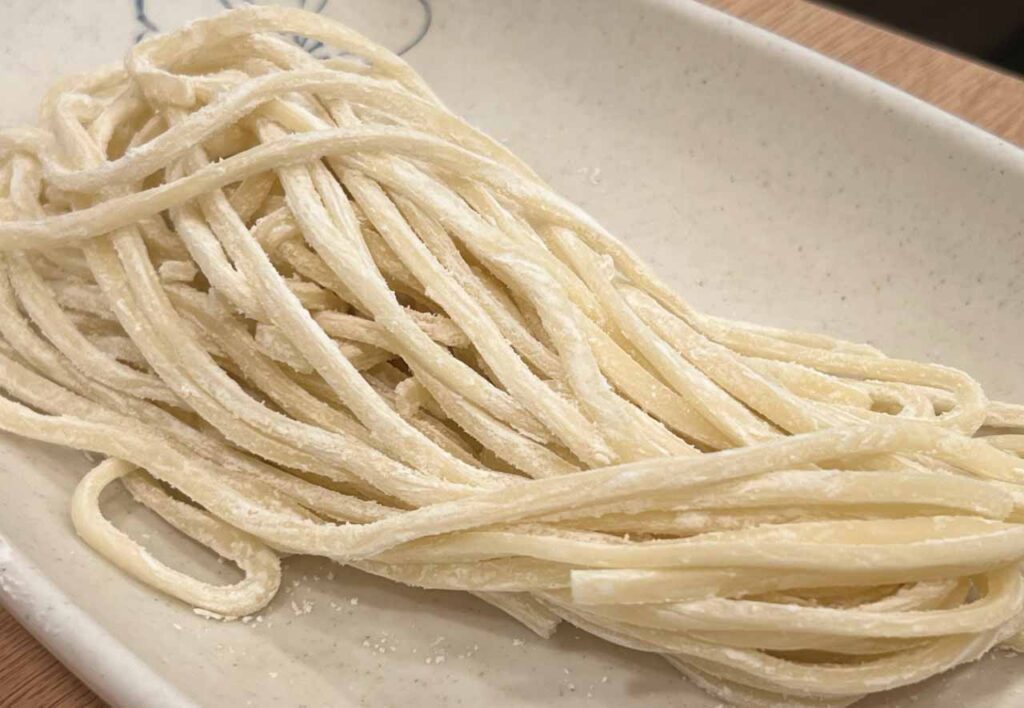
That’s the moment you add the kalguksu noodles (칼국수) — thick, hand-cut wheat noodles that go straight into the pot.
They absorb that concentrated broth as they cook, and what you end up with isn’t just noodle soup.
It’s something closer to the best bowl of chicken noodle soup you’ve ever had, made entirely from the meal you just ate.
Andy from Hongdae — who’s seen a lot of meals come and go — puts it this way:
“Skipping the kalguksu finish is like leaving a movie right before the ending. You were this close.”
Watch for the noodles to turn slightly translucent and float gently to the surface.
That’s when they’re done. Eat them immediately.
🎬 Related Video: 한국인보다 외국인에게 더 유명한 한식?! 뜨끈한 국물에 닭이 통째로 (Korean Food More Famous Among Foreigners?)
The full experience — broth, chicken, noodle finish — captured in one video. Worth watching before you go so you know exactly what to expect.
Practical Tips Before You Go
A few things that’ll make your visit smoother:
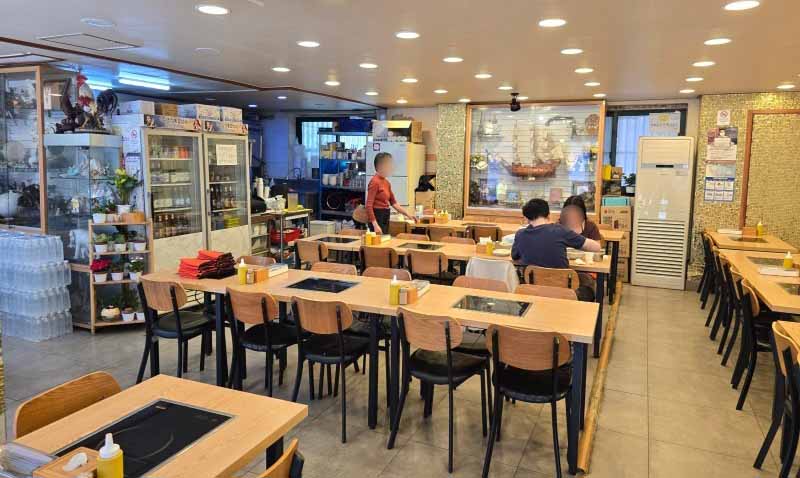
Expect a wait, especially on weekends. This place fills up fast. Your best bet is to arrive right when they open at 11:00 AM, or aim for the mid-afternoon lull around 3:00–4:00 PM.
Evening visits, especially on Fridays and Saturdays, can mean a 20–30 minute wait outside.
Yes, there’s an English menu. The staff are used to foreign visitors and have plenty of experience communicating across language barriers. Even if your Korean is zero, you’ll be fine.
Go easy on the mustard at first. Korean mustard (gyeoja) is sharper than the yellow mustard you might be used to. Start with a small amount, taste it, and add more if you want that nose-clearing hit.
Bring cash or a Korean card if possible. Most places in Hongdae accept international cards now — and as of March 2026, Seoul’s subway system also began accepting overseas-issued payment cards — but it’s always good to have a backup.
Sit near the pot. It sounds obvious, but the experience is completely different when you’re close enough to feel the steam and smell the broth as it cooks. That’s the whole atmosphere.
Hongdae Dak Hanmari — A Final Thought…
Some meals are just food. You eat, you leave, you move on.
And then there are meals that feel like something more — where the act of sitting around a pot, building your own sauce, pulling apart a whole chicken together, and finishing with a bowl of noodles soaked in broth you made yourself… actually means something.
Hongdae Dak Hanmari is that kind of meal.
It doesn’t need to be a special occasion. It doesn’t need to be cold outside (though honestly, it hits different when it is). It just needs you, someone to share it with, and the patience to let the broth do its thing.
If you’re visiting Seoul and you’re wondering what Korean food actually feels like — not just tastes like, but feels like — this is a pretty good place to find out.
Have you tried Dak Hanmari before? Did you go for the kalguksu finish, or did you leave before the best part? Drop a comment — genuinely curious. 😄