
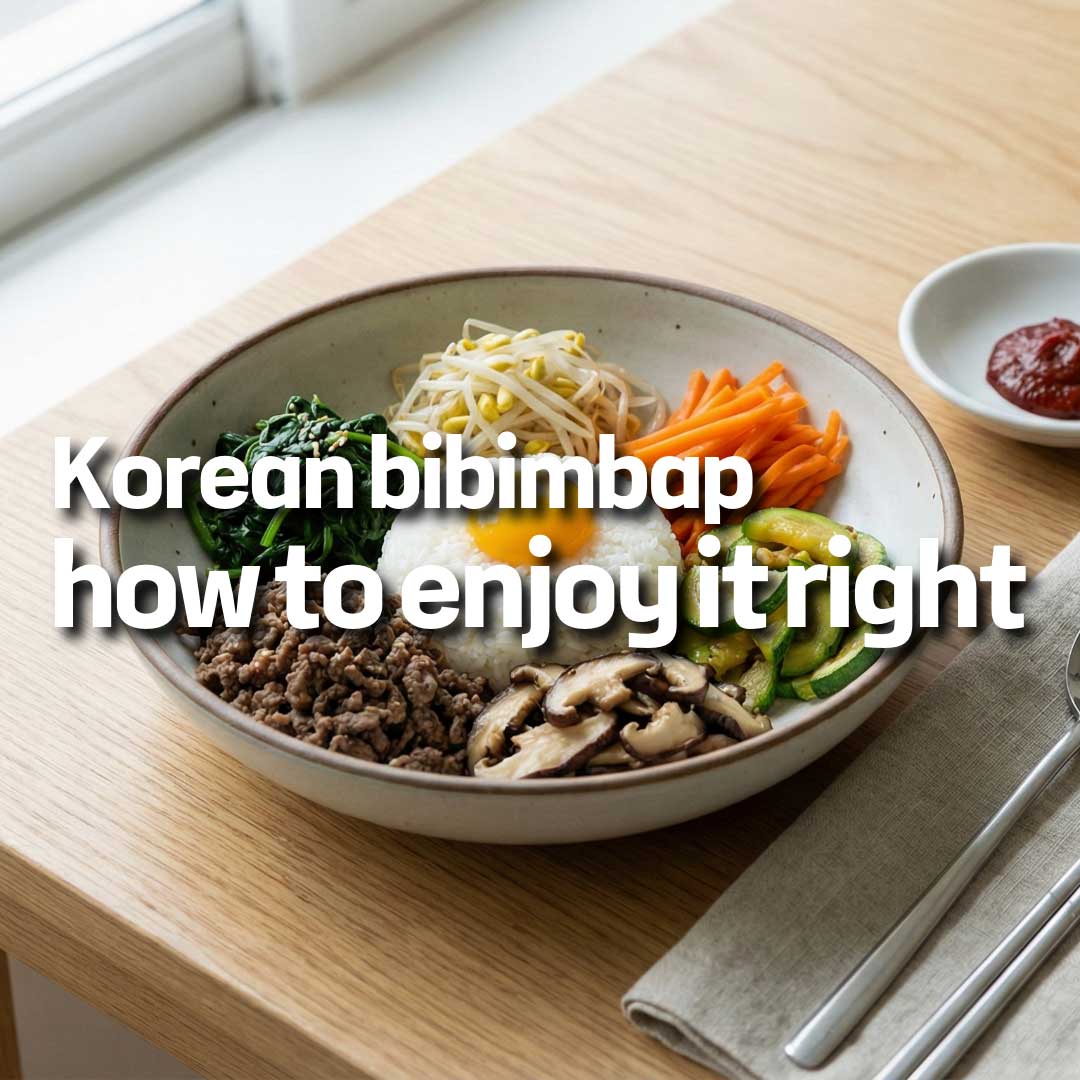
Korean bibimbap is a Korean-style one-bowl meal where rice, vegetables, protein, and sauce come together and you mix it into “your own flavor.” While traveling, it’s a low-risk order even when menus feel unfamiliar, and in everyday life it’s a smart way to use up side dishes. Small details, like how much gochujang you add, when you drizzle sesame oil, and how you keep the dolsot crust crispy, can make or break satisfaction. Today, I’ll walk you through ordering phrases, mild options, and how to choose among popular styles.
Understand bibimbap meaning and build
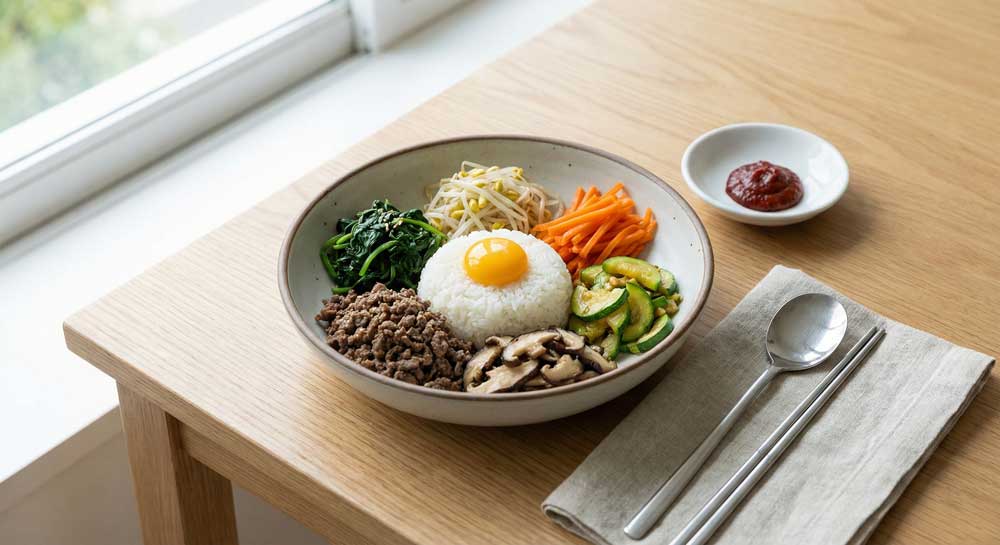
Bibimbap literally means “mixed rice,” and it’s simple but well-balanced. Typically you get rice topped with several seasoned vegetables, a protein like beef or egg, seaweed or sesame, and a sauce such as gochujang or a soy-based mix. The key is not making it intense all at once—add sauce gradually and tune it to your taste.
Ready-to-use ordering phrases in Korea
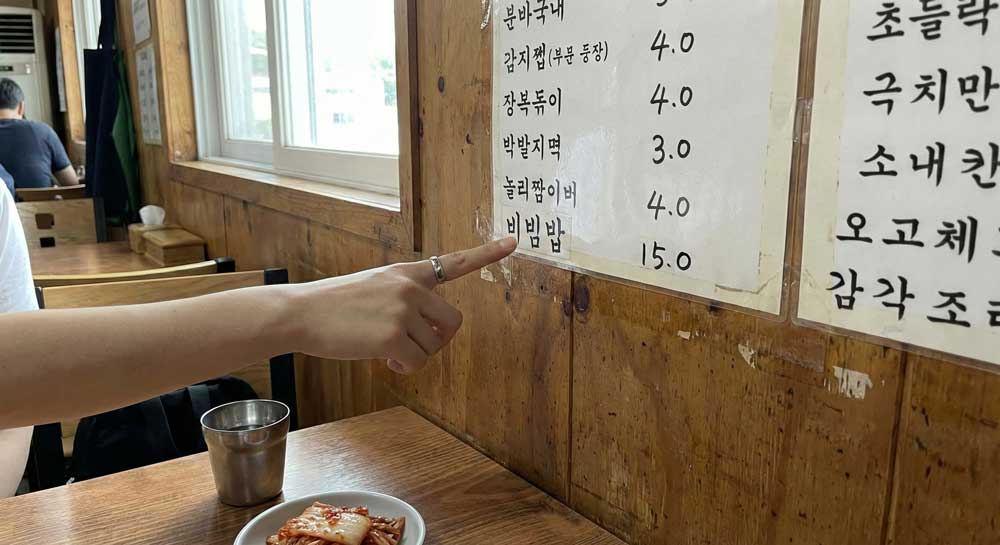
What visiting friends ask most is, “What do I say?” The shortest line is simply “One bibimbap, please,” and you can add a small note if you want less spice or no meat. Save these lines in your phone—perfect pronunciation usually isn’t required.
Mini checklist for ordering notes
- Less spicy please, gochujang on the side (덜 맵게요 고추장 따로 주세요)
- Can you make it without meat(고기 빼고 가능해요)
- Can I get the egg soft-cooked(계란 반숙으로 가능해요)
- Please give me water too(물도 같이 주세요)
How to choose among bibimbap types
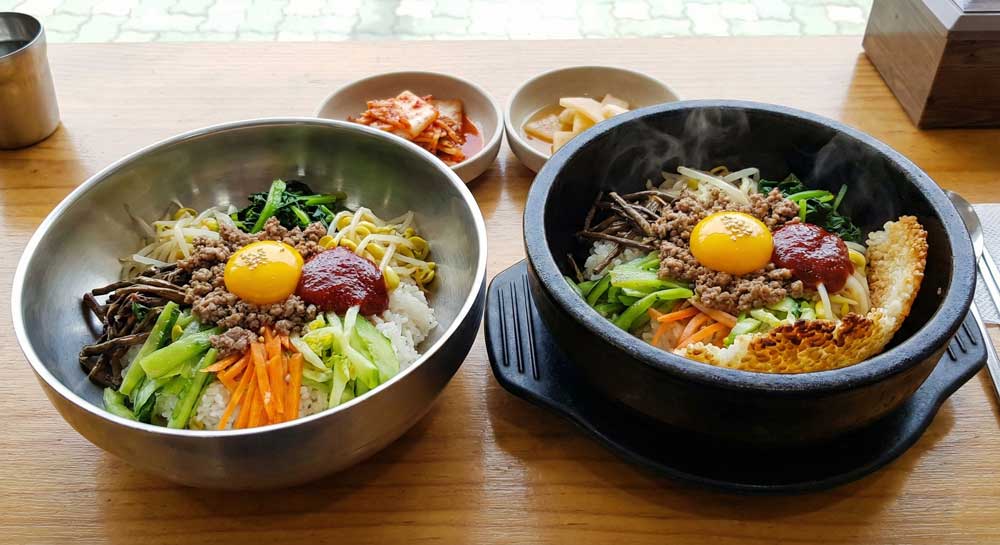
Types vary by region and restaurant, but the decision rule is simpler than it looks. If you want heat and crunch, go dolsot; if you want something lighter, choose regular; if you worry about spice, look for soy-based styles or ask for sauce on the side. If you don’t eat meat, asking about tofu, egg, or bean-based toppings is a practical way to keep protein in the bowl.
Quick comparison table by style
| Type | Best for | Beginner tip |
| Regular bibimbap | Light meal | Start with half a spoon of gochujang |
| Dolsot bibimbap | Hot and crispy | Wait 30 seconds before scraping the bottom |
| Yukhoe bibimbap | Rich and savory | Check freshness notes for raw beef |
| Vegetarian bibimbap | Clean balance | Pair with soy sauce or a bit of lemon |
Spice control and sauce alternatives
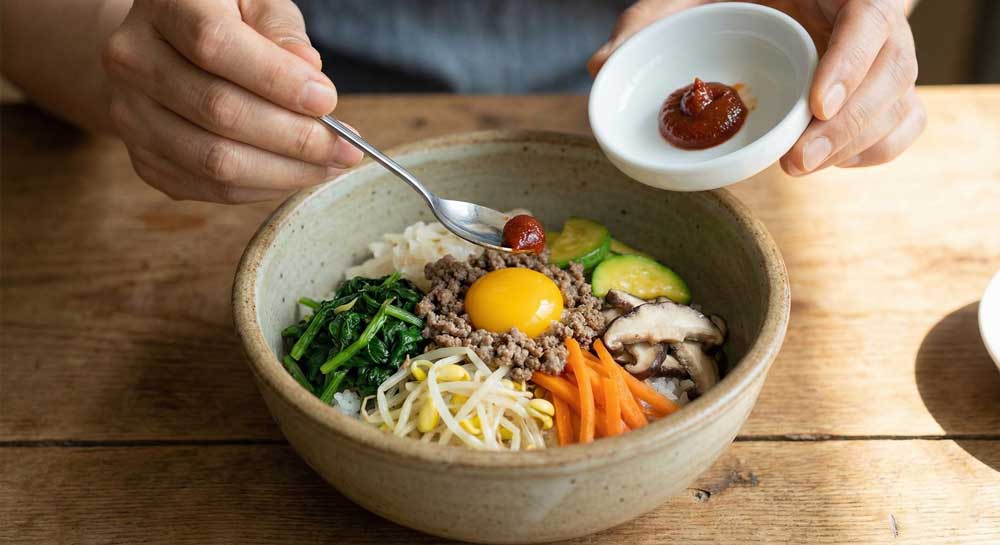
A common mistake for spice-sensitive eaters is making a big “tasty-looking swirl” of gochujang. Usually, starting with half a spoon, mixing, and then adding more if needed feels much easier on the stomach. If heat is too much, try a light mix of soy sauce and sesame oil with a few drops of vinegar, or keep gochujang on the side and dip as you go.
Prep order and mixing tips at home
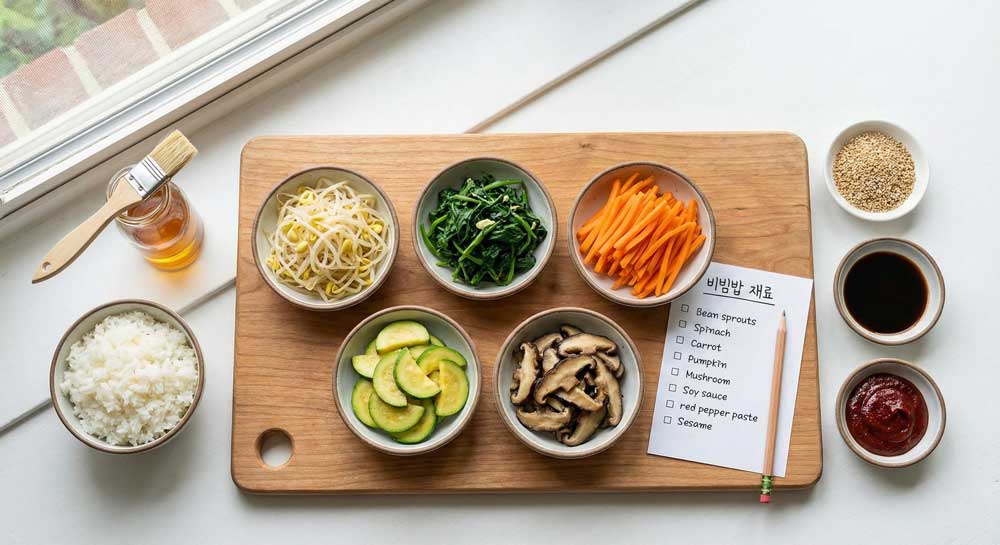
At home, you don’t need “every topping perfectly”—even two vegetables and one protein can look and taste solid. It’s easier if you finish blanching and seasoning the veggies first, then handle rice and sauce at the end. When mixing, avoid pressing down; instead, lift and fold from the bottom with a spoon to prevent clumps.
6-step homemade bibimbap guide
1) Prep rice warm rice mixes easier
2) Blanch at least two veggies and squeeze out water
3) Season lightly split salt or soy sauce in small amounts
4) Add protein fried egg or pan-seared tofu
5) Start sauce from half a spoon of gochujang or keep it separate
6) Fold-mix for about 20 seconds, taste, then adjust
Small details that boost flavor
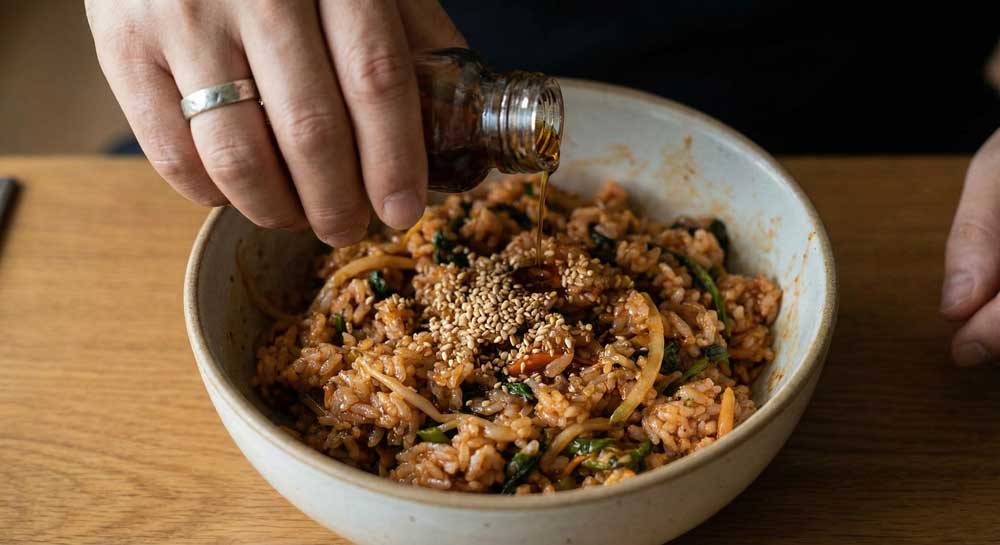
If you choose dolsot, the crispy rice is often better with “a short wait” than “scraping fast.” After mixing, leaving it for about 20–40 seconds can help the bottom crisp up more. Also, instead of adding a lot of sesame oil early, a drop or two at the end can lift aroma without making the bowl feel too heavy.
Sometimes you may want a wider picture of Korean meals beyond bibimbap. If you check my Korean Culture category posts on kimchi and banchan setups too, the “full table” flow becomes much easier to understand.
To wrap up, Korean bibimbap is less about a single correct recipe and more about finding “the mix that feels right for you,” so it’s smart to start gently on your first bowl. Save just one ordering line from today, and next time begin with half a spoon of gochujang and mix slowly.
FAQ
Q1. Do I have to use gochujang for bibimbap
A. Gochujang is common, but soy sauce and sesame oil can be plenty flavorful too
Q2. Why does dolsot bibimbap feel more delicious
A. The heat retention and crispy rice add contrast in one bowl
Q3. Roughly how many calories is bibimbap
A. It varies a lot by ingredients and sauce, so controlling rice and gochujang amount is the practical lever
Q4. What’s the key when ordering vegetarian bibimbap
A. Don’t only ask about meat—also check if the sauce contains fish-based ingredients
Q5. My rice clumps when I mix bibimbap
A. Use warm rice and fold from the bottom upward to reduce clumps