

A Korean name stamp can turn your Korea trip into a “tangible memory” you can hold.
Stamps are an important part of Korean culture, and the in-gam seal is still often used in government offices and various contracts.
In some ways it can feel simpler than a signature, and in certain moments it can also feel more “certain.”
Of course, if someone really tries, almost anything can be copied, so it’s easier to view stamps as “cultural habit and procedure” rather than “perfect security.”
For travelers, making a stamp engraved with your Hangul name becomes a great souvenir, and it also makes a well-received gift.
Personally I think it’s worth doing at least once, and this is one thing Andy strongly recommends.
Why stamps are important in Korea
Stamps have long been used as a quick way to mark “I agree,” and that habit has carried into institutions and administration.
In general, many people in Korea use stamps as naturally as signatures, and some find them convenient in paperwork-heavy situations.
However, it’s hard to say a stamp is “always safer,” so for important contracts it’s more realistic to consider the signing method together with identity checks.
As you pointed out, that sense of being simpler and more definite is one reason stamps remain a living culture.

In-gam seal vs casual stamp at a glance
For travel souvenirs, the stamp is usually more about memory and gifting than heavy “official use.”
Still, knowing the difference between an in-gam seal and a casual stamp helps you avoid unnecessary anxiety—or taking it too lightly.
The table below is for general understanding, and real procedures can vary by situation and institution.
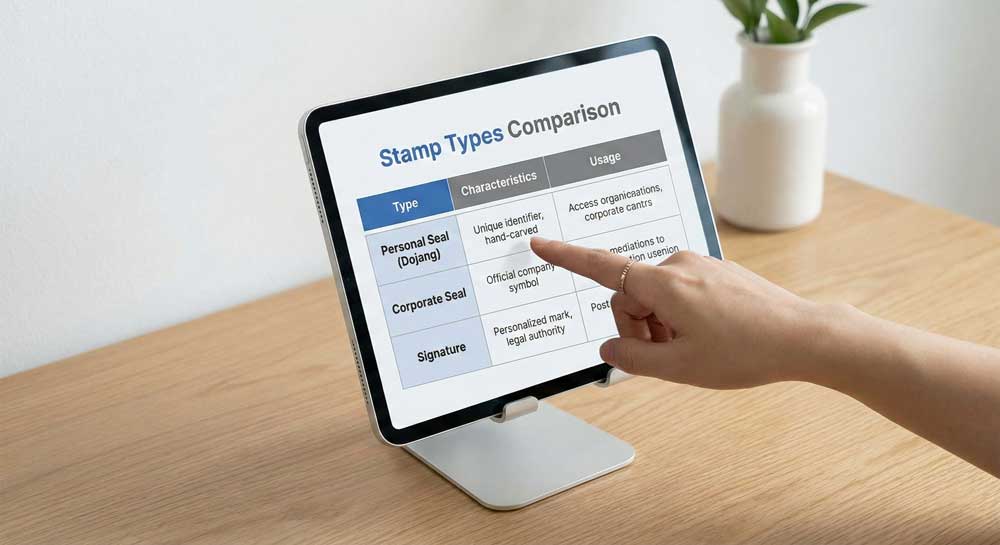
Stamp types comparison table
| Type | Typical purpose | Recommended for travelers | Note |
|---|---|---|---|
| Casual stamp | Package receiving, simple confirmation | Good as a souvenir or gift | Low pressure |
| In-gam seal | Used for important documents after registration | Be careful if you want official use | Manage loss carefully |
| Corporate seal | Company contracts and official docs | Not really a travel souvenir | Different from personal seals |
4 things to decide before making your Korean name stamp
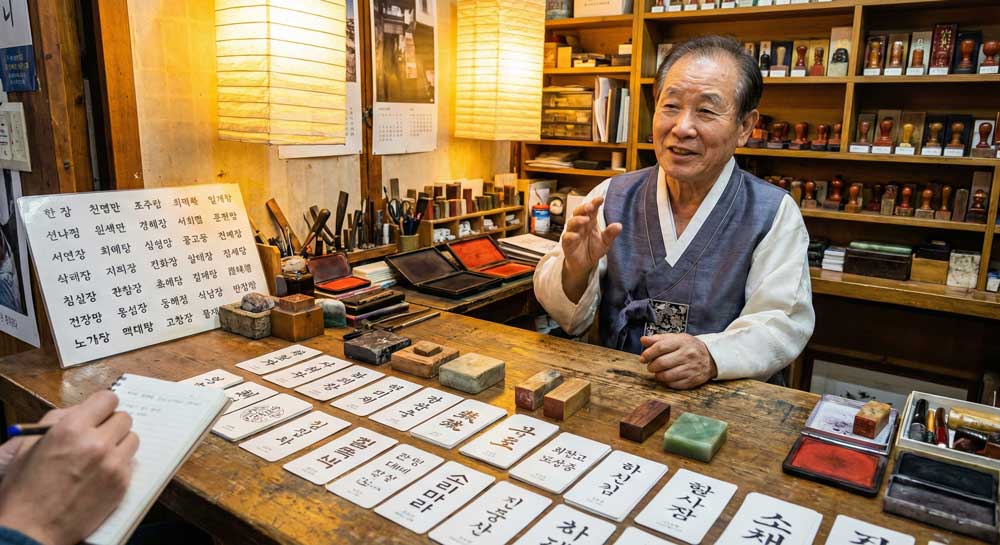
Before making your Korean name stamp, it helps to decide your “criteria” before obsessing over the characters.
First, decide your Hangul name—whether you’ll transliterate your real name or choose a Korean-style name.
Second is font vibe, third is material, and fourth is purpose; with these decided, the in-store discussion becomes quicker.
Applying your view that it can feel easier and more certain than a signature, deciding whether it’s for “everyday paperwork” or “souvenir use” becomes especially important.
A realistic step-by-step guide and timing
Usually, half of stamp-making is how fast you decide, and the other half is the actual production time.
Processes vary by shop, but the steps below generally reduce trial and error.
If your itinerary is tight, it’s easier to visit with a memo of your name spelling and purpose rather than going in totally spontaneous.
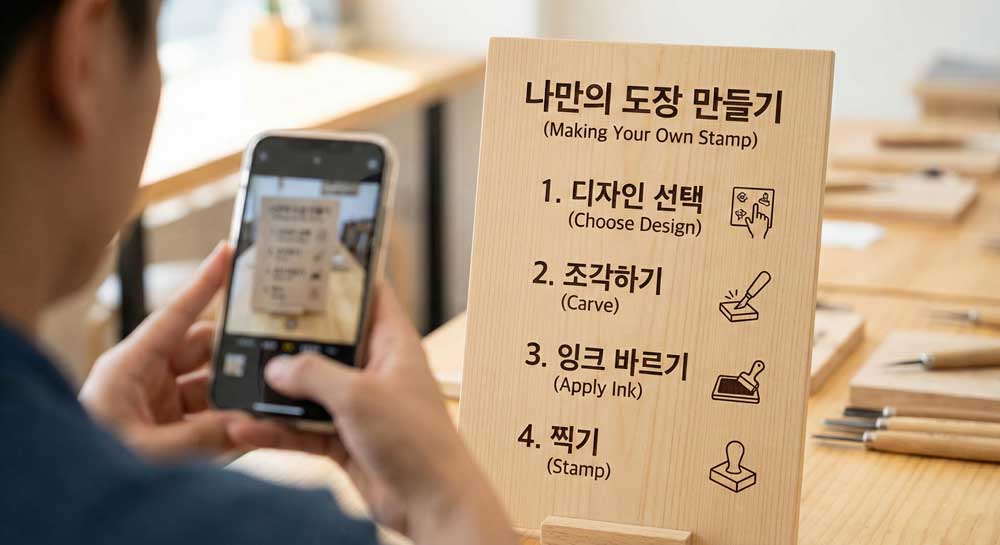
Step-by-step guide
1) Confirm your Hangul name spelling and character count
2) Choose a font and check the vibe: soft, formal, playful, etc.
3) Pick a material: compare weight and feel among wood, stone, metal
4) Review the layout proof and order production—typos are the most common mistake
5) Test stamp after receiving: check smudge and clarity
Gift phrases and etiquette tips
A stamp is small but personal, so when gifting it, the tone should make the recipient feel comfortable.
For example, say it lightly like “I engraved your name in Hangul,” and avoid framing it like an official in-gam seal.
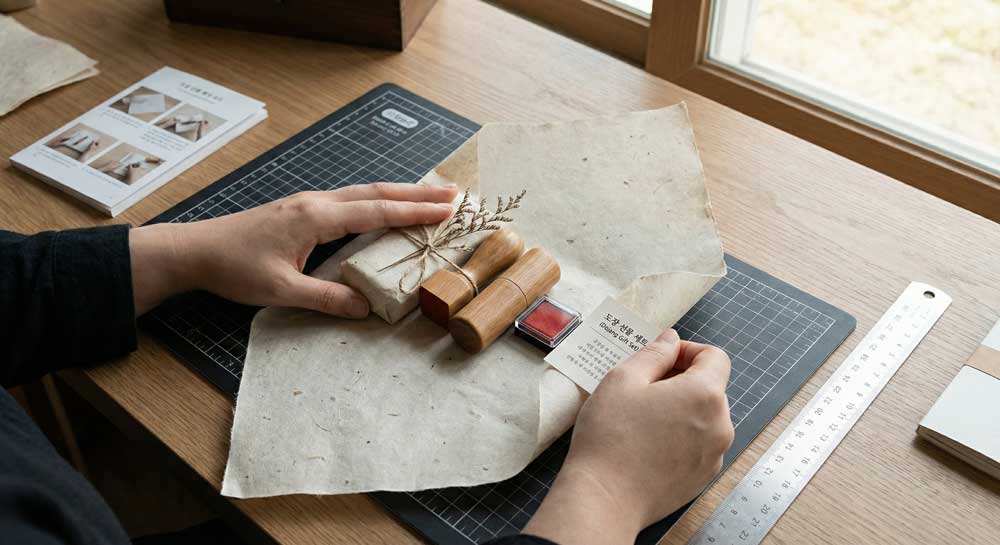
As a travel gift, adding a case and a small ink pad improves usability and makes it more memorable.
As you said, it becomes a great gift because it also gives the feeling of “I understood a piece of Korea.”
Multiple meanings of the word dojang
In Korean, “dojang” can mean different things depending on context, which can confuse first-timers.
In this post, dojang means a “stamp/seal,” but it can also mean a “training hall,” like a taekwondo dojang.
Also, “to stamp” literally means placing a seal, but in daily speech it can be used figuratively as “finalize” or “greenlight.”
This polysemy is a nice example of how Korean culture and language connect, and it adds fun if you explain it briefly when gifting.
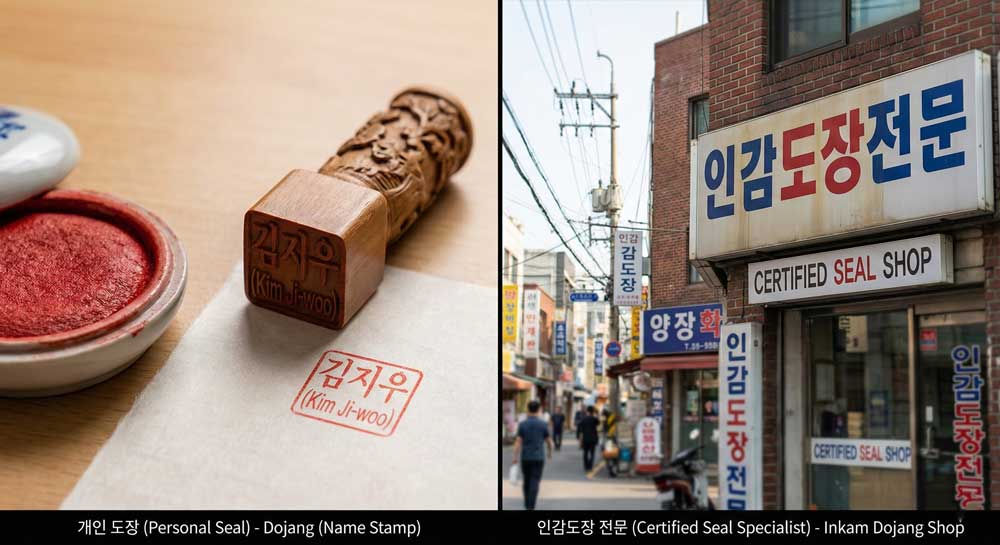
Closing How to keep your Korean name stamp as a memory
Stamps are still an important cultural tool in Korea, and the in-gam seal remains in use as part of certain procedures.
As you noted, it can feel simpler and more certain than a signature, which makes it an easy “try it once” experience for travelers too.
When making your Korean name stamp, decide purpose and font vibe first, and just prevent typos to boost satisfaction.
Your next step is simple: write down two Hangul spelling options for your name and block 30 minutes in your itinerary to visit a stamp shop.
FAQ
Q1. Can foreigners make a stamp in Korea
A1. Generally yes, and it’s easier if you arrive with your preferred name spelling.
Q2. Is it a bad idea to make an in-gam seal as a souvenir
A2. You can, but it can feel very “official,” so for a souvenir, a casual stamp approach often feels lighter.
Q3. Which stamp material is best
A3. Wood is light, stone feels weighty, and metal feels solid—choose based on feel and portability
Q4. Does your Hangul name have to be a Korean-style name
A4. No, transliterating your real name is common, and for gifts people also use cute nickname-style spelling
Q5. What if I lose my stamp
A5. For a souvenir stamp you can remake it, but if it’s registered for important use, you should check the proper procedures—so manage it carefully.