
If you want to feel “real Korean vibes” fast in Seoul, few places are as direct as a local market.
Mangwon Market is packed with food options and is also practical for real grocery shopping, which makes it efficient for both travelers and long-stay visitors.
For foreigners, it often becomes an easy way to see “actual Korean daily life” up close. In my view, Mangwon Market is a place where you can feel Korean sentiment, find diverse foods, pay mostly affordable prices, and naturally see everyday working-class life.
If you’re staying for a month or more and need to cook for yourself, one solid grocery run here can make Korean living feel much easier.
In this post, I’ll lay out a simple route and ordering tips so first-timers can enjoy it without stress
Why Mangwon Market works for foreigners
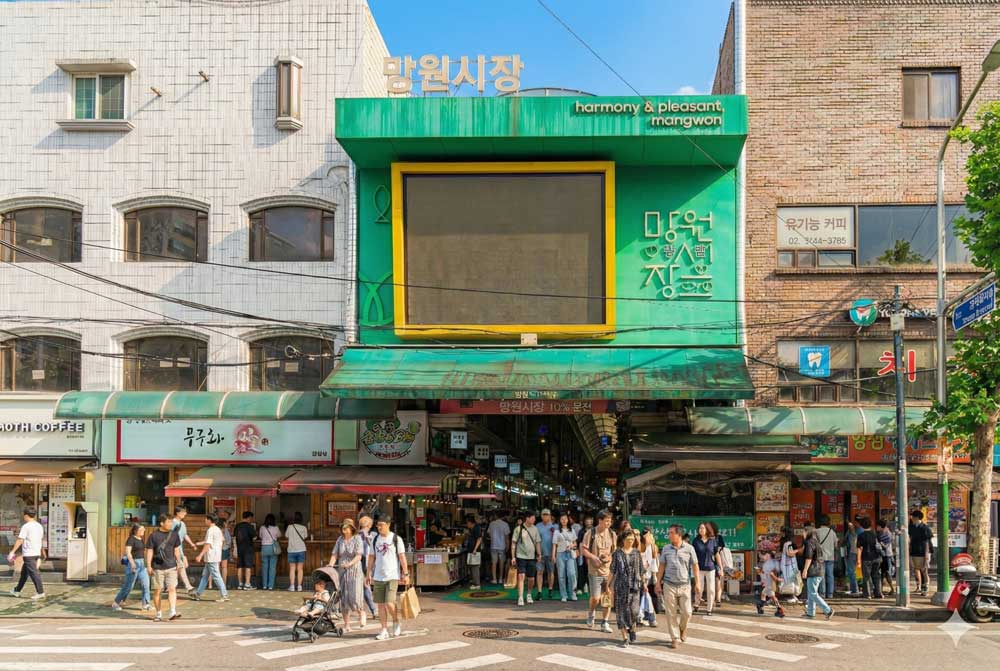
What foreigners tend to love is that it’s not a “tourist-decorated zone,” but a place where people actually live.
Usually, you see more everyday details—faces, speech, shopping baskets—than on franchise-heavy streets.
In my view, Mangwon Market feels less overly tourist-priced, so you get both fun eating and fun shopping.
And even if you spend the same amount, you get more moments that stick as “experience,” often longer than photos do.
A simple route and timing tips for first-timers
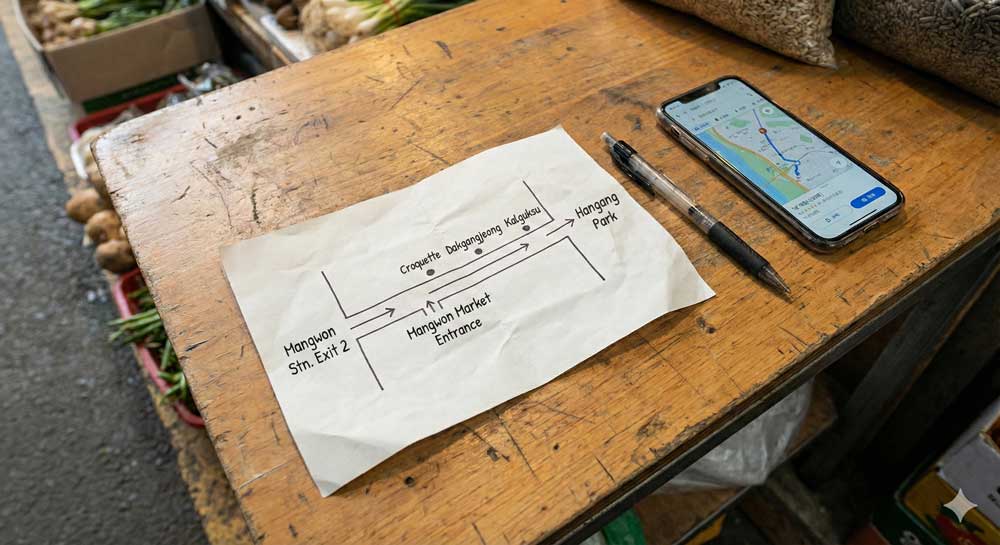
If it’s your first time, it’s easiest to do “one big loop, then return to your favorites.” Usually, weekend daytime is the most crowded, while late morning or early afternoon on weekdays is easier to walk.
When lines are long, don’t lock into just one spot—mix in takeout-friendly items and “buy in a distributed way” to save energy.
Once you step outside, Mangnidan-gil cafés and walking routes connect smoothly, so it’s easy to plan a full day.
How to choose what to eat
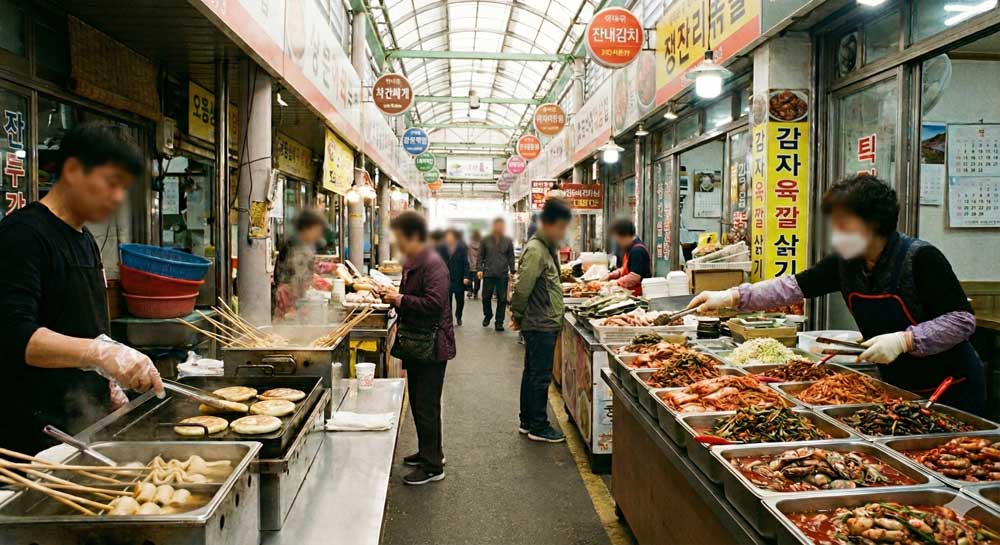
For market food, you’ll fail less if you separate “eat now” from “take to your lodging.” For eat-now items, choose stalls with fast turnover even if the line is long, and for take-home, mix in side dishes or easy ingredients you can reuse tomorrow.
Spiciness varies a lot, so rather than trusting a simple “not spicy,” it’s safer to ask what the spice level is like.
Instead of choosing only by photos, watch what the person next to you is picking up—this often reveals popular items quickly.
One-month-stay grocery checklist
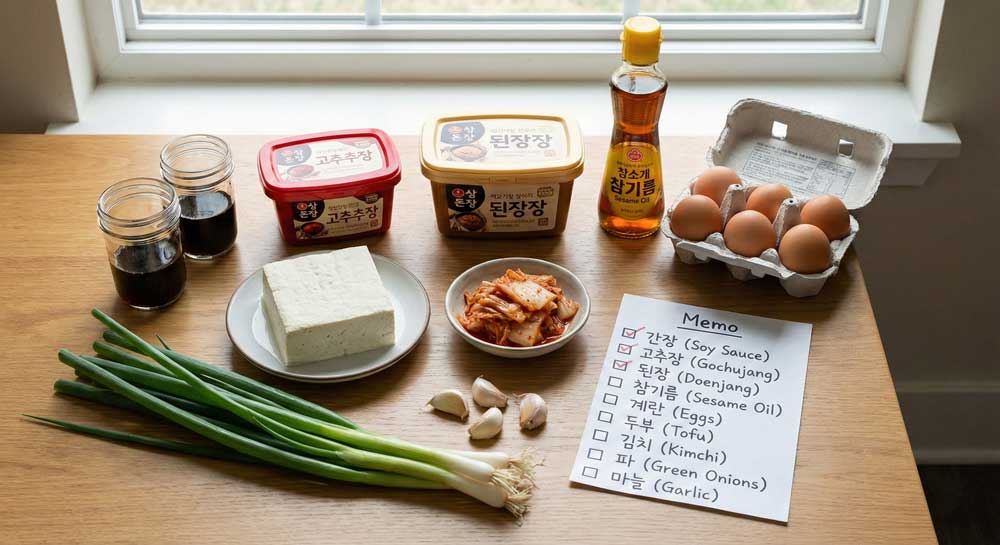
In my view, if you’re staying a month or longer and need to cook, one market run is essential—not only for price, but because the options are simply more realistic for daily life.
If you rely only on convenience stores and supermarkets, food costs often rise, or your palate gets tired quickly.
The checklist below is designed to reduce first-time mistakes for foreigners, focusing on “5-minute Korean cooking” ingredients.
As you get used to it, expand into more side dishes, and if you’re unsure, start safely with eggs and tofu.
- Grocery checklist summary
- Eggs tofu kimchi are a solid base
- Green onion garlic onion are the “switch” for Korean cooking
- You can start with just two of soy sauce doenjang gochujang
- If rice feels heavy, prioritize ingredients before instant rice
- For fruit, smaller purchases more often work better
Payments, ordering, and practical hygiene tips
Some stalls take cards, and some prefer cash. So it’s natural to ask “Does card work?” first, and if not, follow directions for a nearby ATM or bank transfer options.
For hygiene, choosing stalls with visible tongs and gloves usually covers the basics, and for takeout, dry items travel easier than soupy ones. For foreigners, having a few short order phrases ready can noticeably reduce stress.
Korean phrases you’ll actually use
- 이거 하나 주세요 (One of this please)
- 포장 가능해요 (Can you make it to go)
- 안 맵게 가능해요 (Can you make it not spicy)
- 카드 돼요 (Do you take card)
- 얼마예요 (How much is it)
How to bundle the market with nearby spots
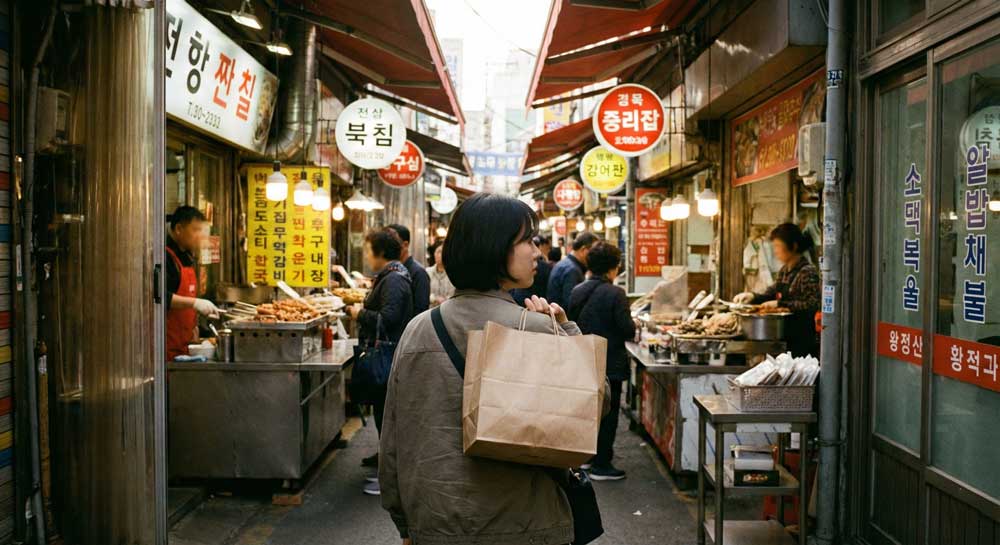
If you only visit the market and leave, it can feel a bit unfinished. Usually, you can continue toward Mangnidan-gil for a café break, or take your food toward the Han River and open it up like a picnic.
If you plan your route in simple blocks like “60 min market, 30 min walk, 60 min café,” your day stays stable even in an unfamiliar city.
If you want more Korean traditional market posts in one place, you can also follow my internal link to other market guides and save time when planning your next day.
FAQ
Q1. Is English enough at Mangwon Market
Usually you can order with simple English and gestures. But memorizing just one or two Korean phrases like “to go” and “card” makes it much easier.
Q2. Do I need to bargain
Most of the time you just pay the listed price. Sometimes you may get a small extra when buying multiple items.
Q3. Can I pay by card everywhere
It depends on the stall. Asking “Do you take card?” before ordering is the safest move.
Q4. Is it truly helpful for a one-month stay
In my view, yes, it helps a lot. You can buy small quantities and build meals quickly with side dishes.
Q5. When should I go to avoid crowds
Usually late morning or early afternoon on weekdays is comfortable. Weekend daytime can mean longer lines.
Finally, once you pick a day to visit Mangwon Market, jot down “3 things to eat and 5 things to buy” tonight and bring that note with you.